Sit, Stay, Survey: How Detection Dogs Are Helping Bog Turtle Conservation
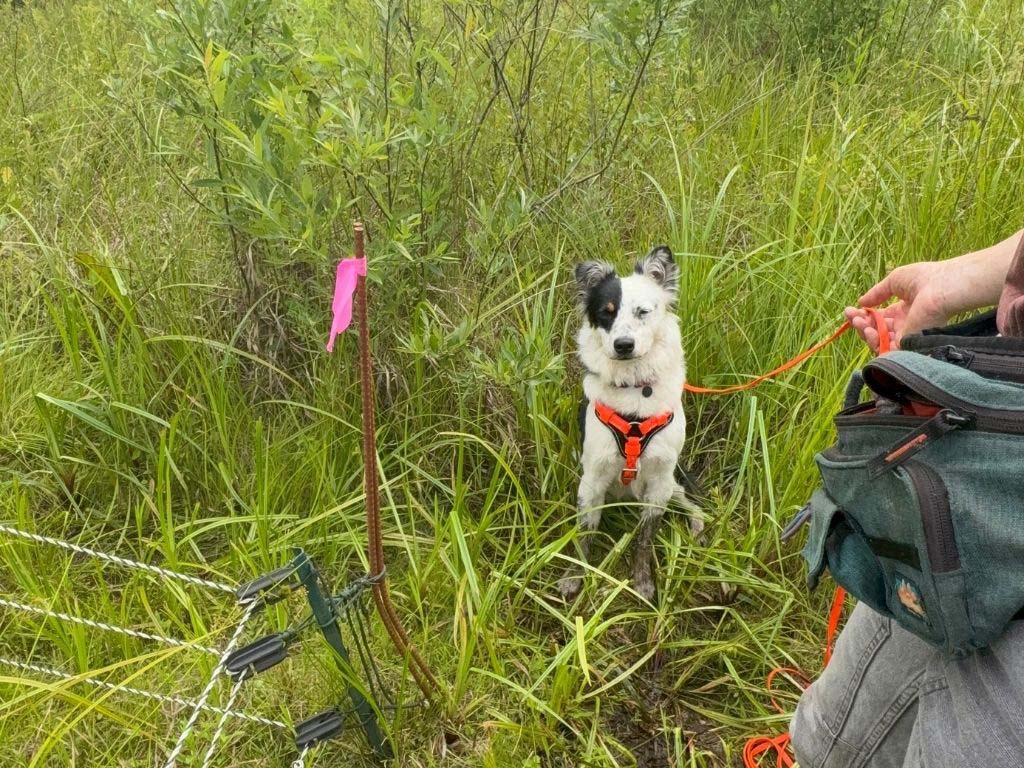
A wet nose is sniffing as light paws patter through the grassy wetland. Stevie isn’t looking for a missing person or narcotics. She’s learning to detect the nests of one of the smallest and most elusive turtles in North America.
At just one year old, this heeler and Australian shepherd mix is in her first season training as a conservation detection dog. Along with her two experienced canine partners, she is helping ARC biologists test whether a dog’s nose can help us find and protect Threatened bog turtles.
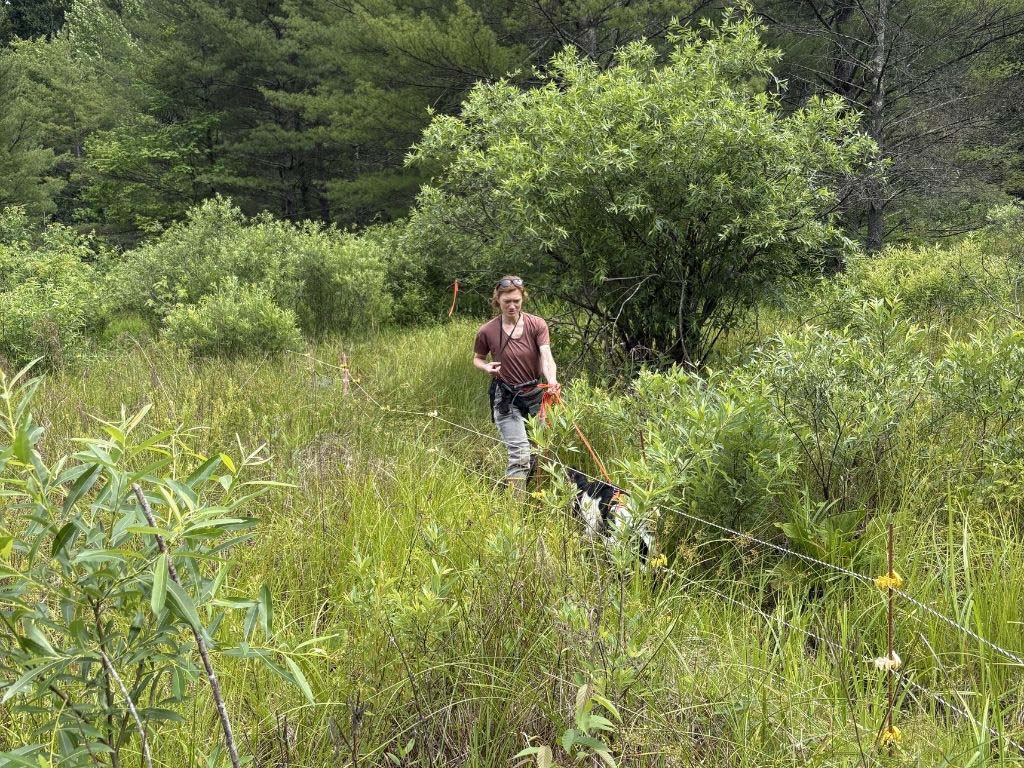
“I can’t smell a bog turtle,” joked Southern Appalachians Program Coordinator Emilly Nolan. “Humans are visual creatures and limited in our ability to search specific habitats, but dogs rely heavily on their noses.”
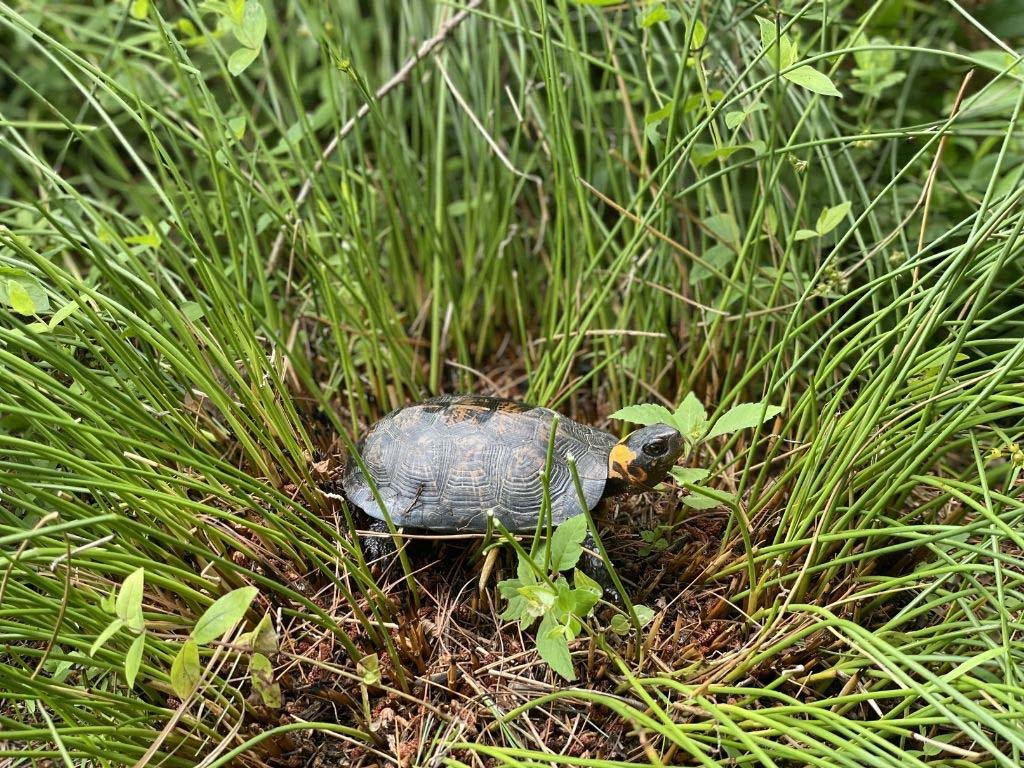
As hatchlings, bog turtles are the size of a quarter, and fully grown, they’re just four inches long. Their dark shells blend seamlessly into the dense bogs and fens where they spend most of their lives buried in mud. This incredible camouflage has helped them survive for thousands of years, but Emilly explained, “very few pristine habitats are left due to land use, agriculture, development, and loss of beavers and large grazing mammals.”
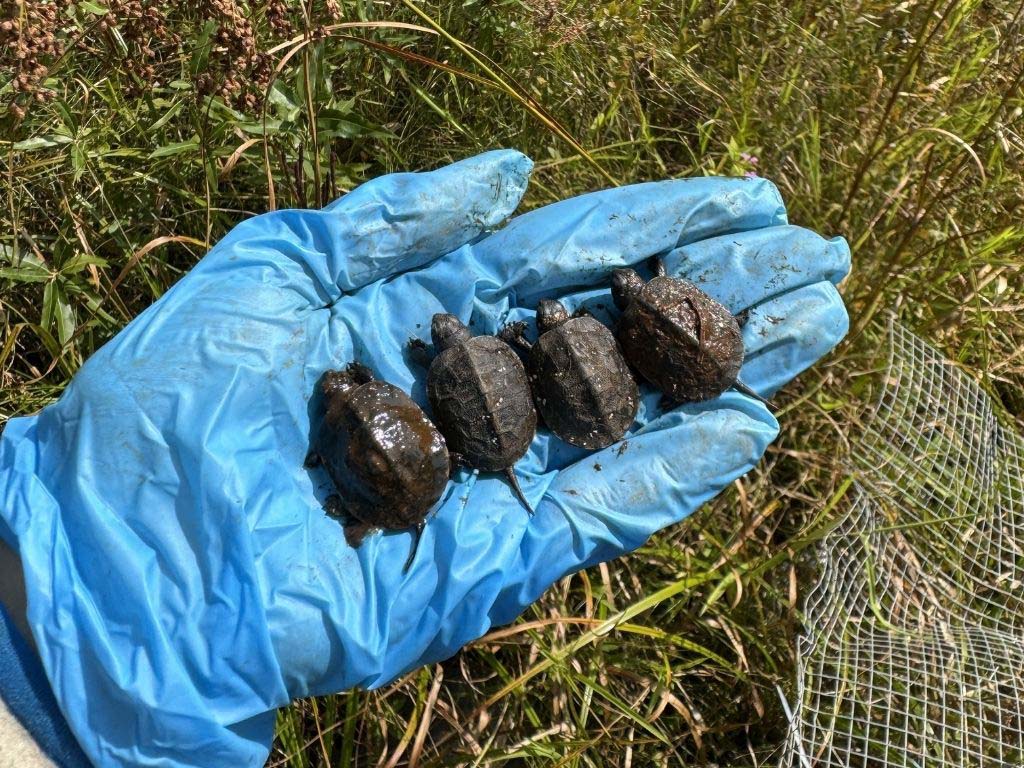
In North Carolina, there may be as few as 14 viable bog turtle populations, making every turtle and nest critical to conservation. That’s why ARC partners with The Nature Conservancy and the North Carolina Wildlife Resources Commission to survey wetlands in our Southern Appalachian PARCAs (Priority Amphibian and Reptile Conservation Areas).
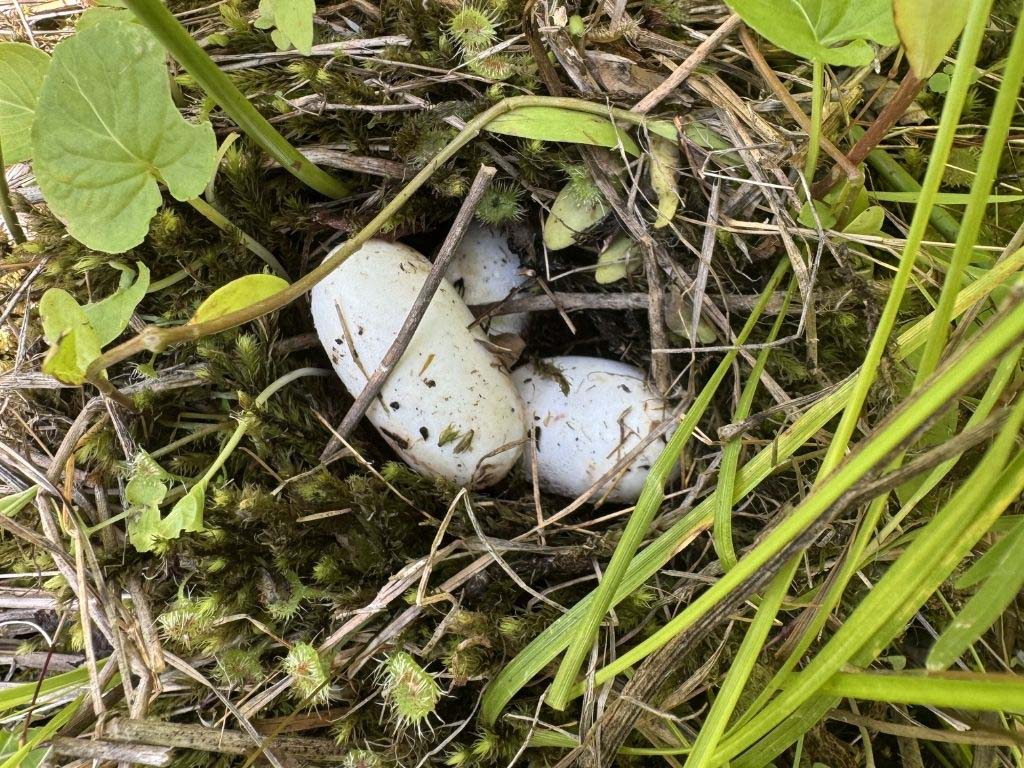
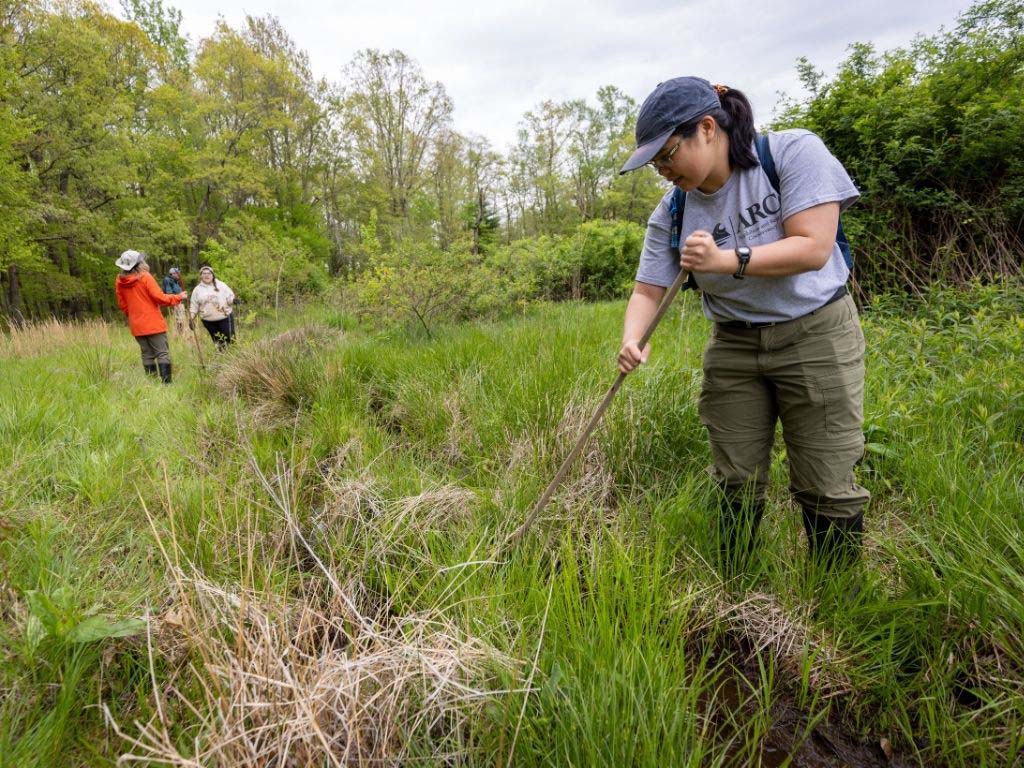
Traditional nest searching isn’t as simple as walking through a wetland. Bog turtles lay just a few small eggs on raised tussocks (think tiny island). To find them, we navigate rugged wetlands, meticulously peeling apart thick grasses and moss while trying not to disturb hidden nests.
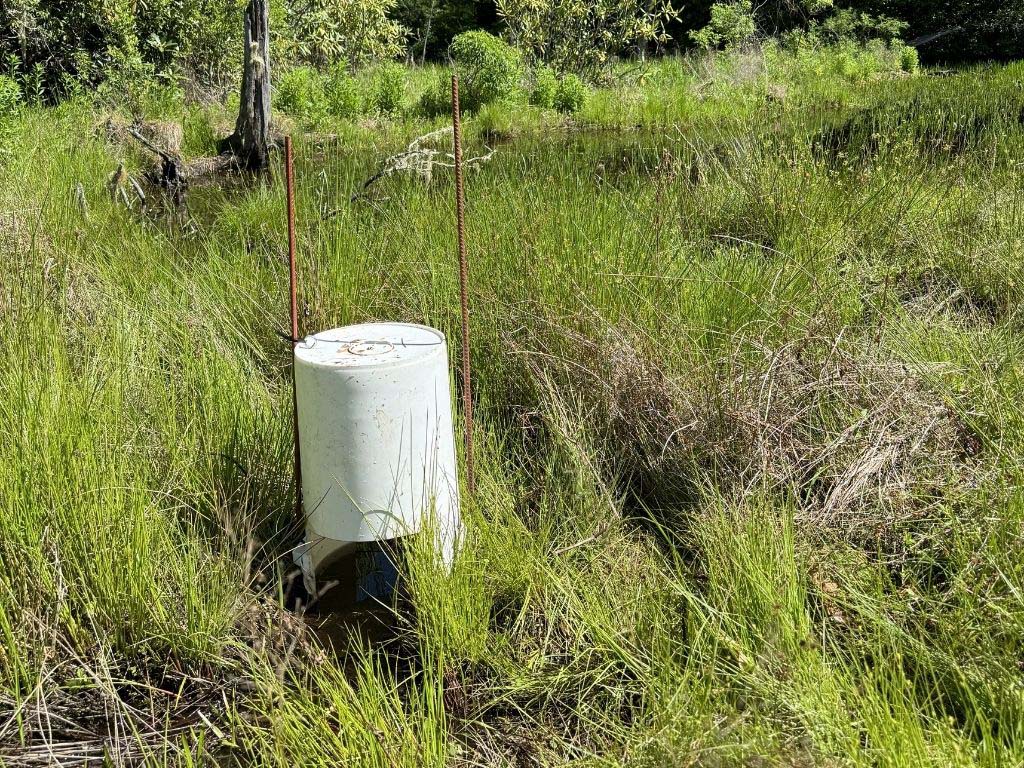
Aerial photography, habitat modeling, and trail cameras housed in buckets help our team pinpoint likely bog turtle habitats. Then, we spend hours probing, or repeatedly poking wooden dowels into the mud in hopes of hearing the “clunk” of a turtle shell. “We look like wizards walking through the bog, poking anywhere in the mud,” Emilly explained. For a more tactile approach, we reach a hand into a muddy burrow, feeling around for a round shell, in a technique fittingly called “noodling.”
These methods help us locate bog turtles, but they all rely heavily on people seeing or feeling turtles that have evolved to remain hidden. Looking at the bigger picture, we asked one simple question: what if we didn’t rely on human senses?
Conservation detection dogs have put their noses to work detecting invasive species, locating rare plants, and tracking imperiled wildlife. They’ve even helped monitor eastern box turtles during prescribed burns and tracked western pond turtles that were reintroduced to habitats.
With the support of the New York-New Jersey Trail Conference Conservation Dogs Program, three detection dogs and their handlers, Sarah and Arden, joined us in the field this summer. This season served as a trial year to train the dogs and test different methods for surveying the challenging terrain.
Labrador retrievers, Lettie and Peat, are both trained to find adult turtles. While their resumes include surveying for wood turtles, box turtles, and spotted turtles, finding bog turtles introduced new challenges. The spongy wetlands are difficult to navigate, and bog turtles are often buried in thick layers of mud.
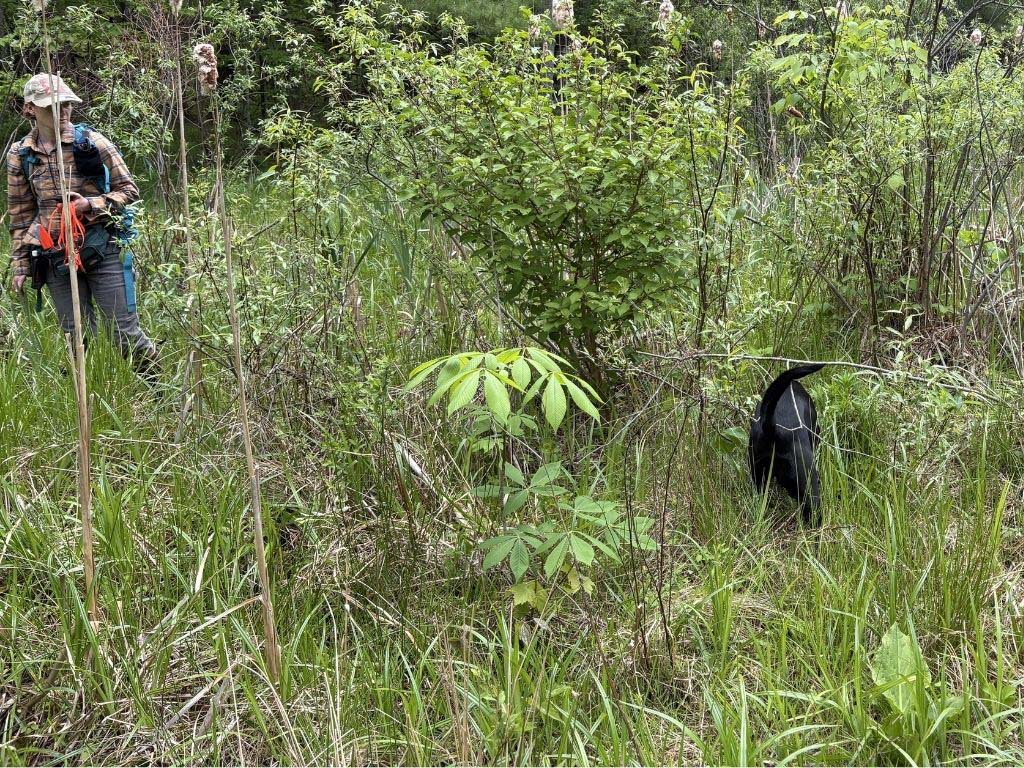
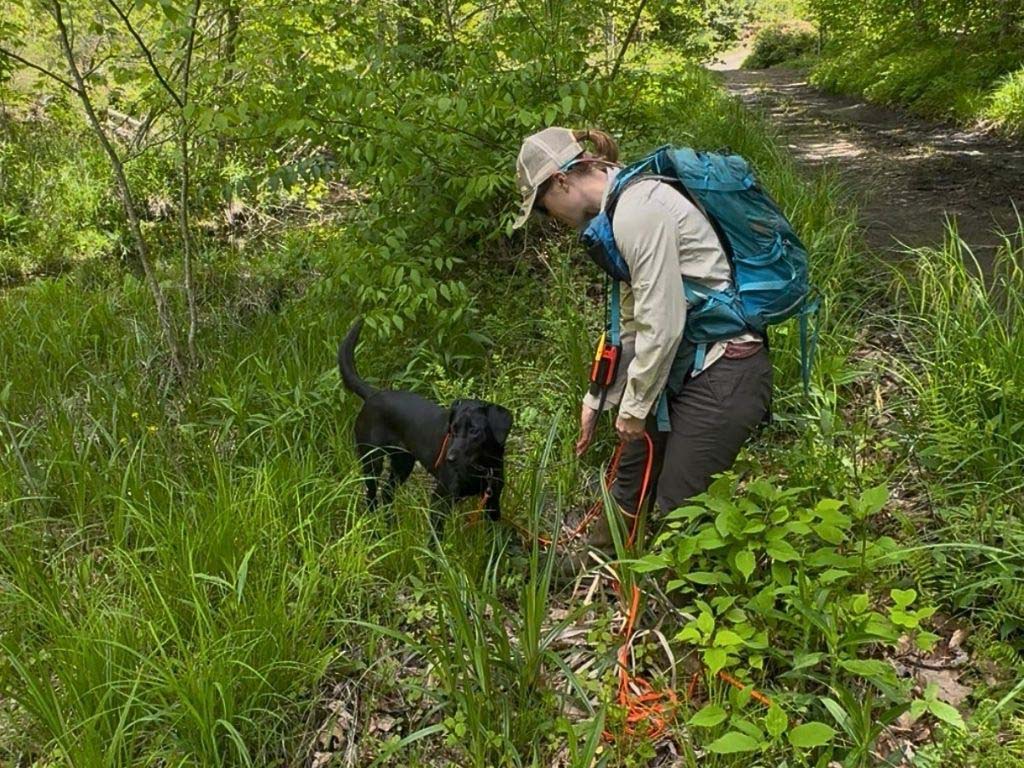
Despite these hurdles, the detection dogs quickly proved their potential. Emilly recalled, “Lettie went to the edge of a wetland, sniffed under a downed log and indicated quickly. There was a turtle tucked deep under the log that wouldn’t have been found with probing.”
This method of “indication” is exactly what made these dogs the ideal candidates for surveying bog turtles. Many detection dogs retrieve turtles in their mouths, but bog turtles have small, soft shells, and observing them where they’re found can provide helpful details about their preferred habitat. Instead, Lettie and Peat use body language, like sitting or pointing, when they find a turtle.
Stevie’s main role will be searching for turtle nests. Her small stature makes her less likely to trample a nest, but she is still learning how and where to step to minimize any nest disturbance. Through a process called imprinting, scent samples are collected on gauze and introduced to Stevie in the field and in training sessions off site.
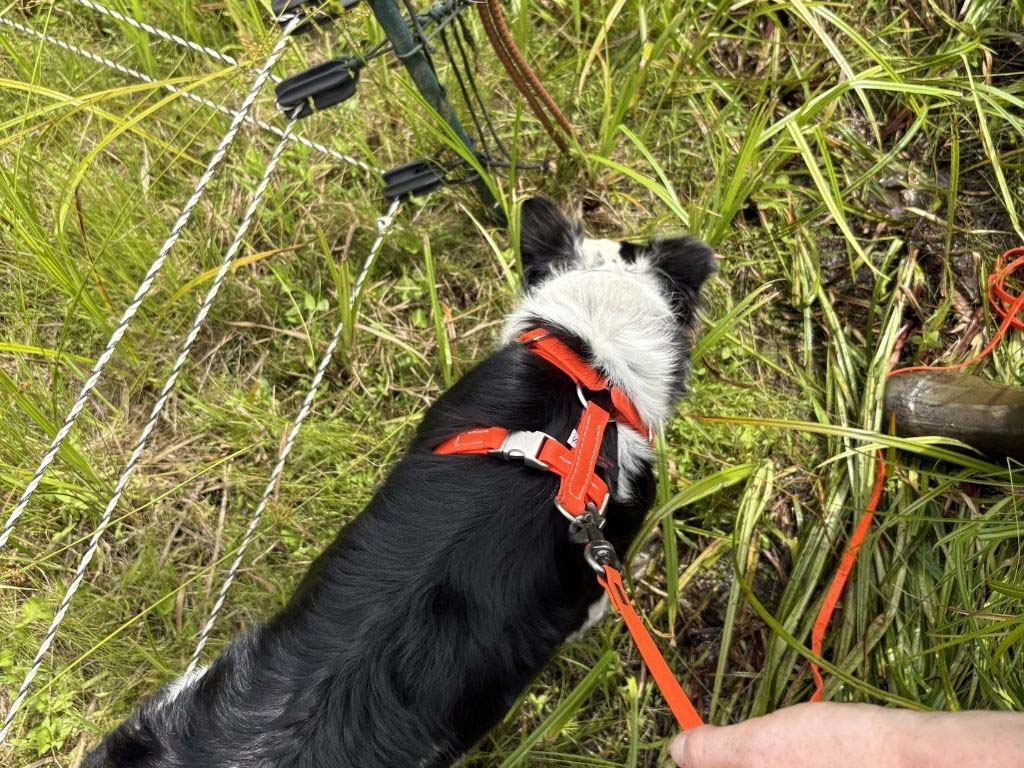
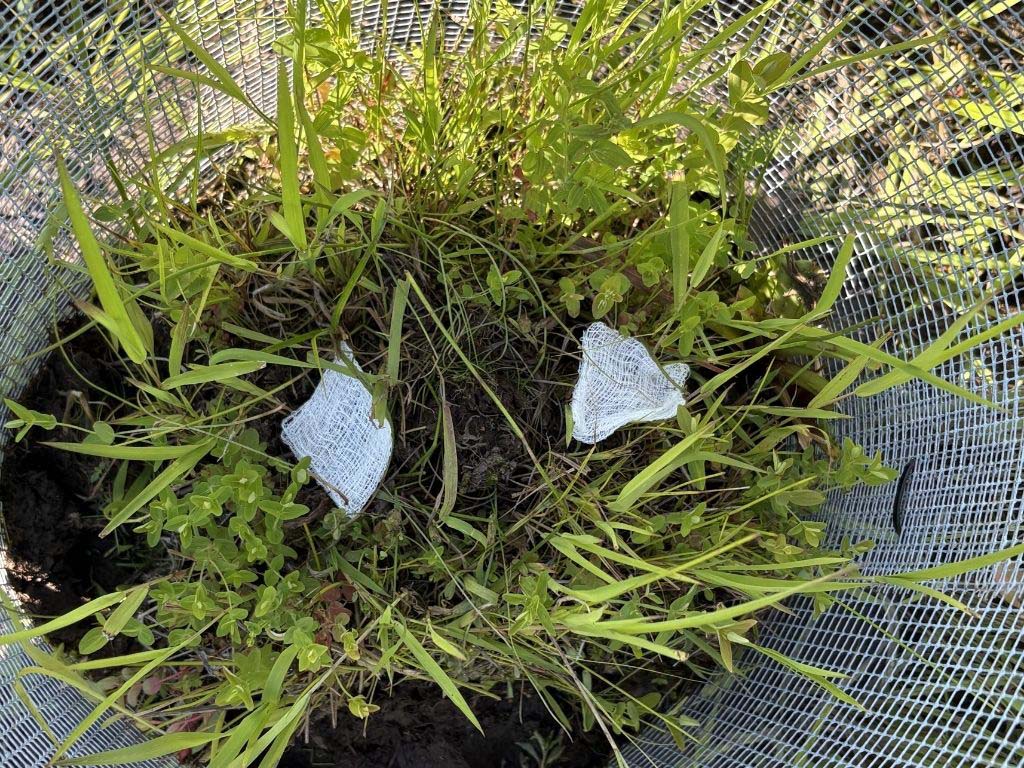
Over the next two years, Stevie will continue training, sharpening her skills and hopefully improving bog turtle surveys. While immediate success may look like a proud dog pointing to a bog turtle in a wetland, finding bog turtles isn’t the end goal.
“Increasing detection probabilities is important so we can more efficiently evaluate sites to understand specific population or habitat needs,” Emilly explained.
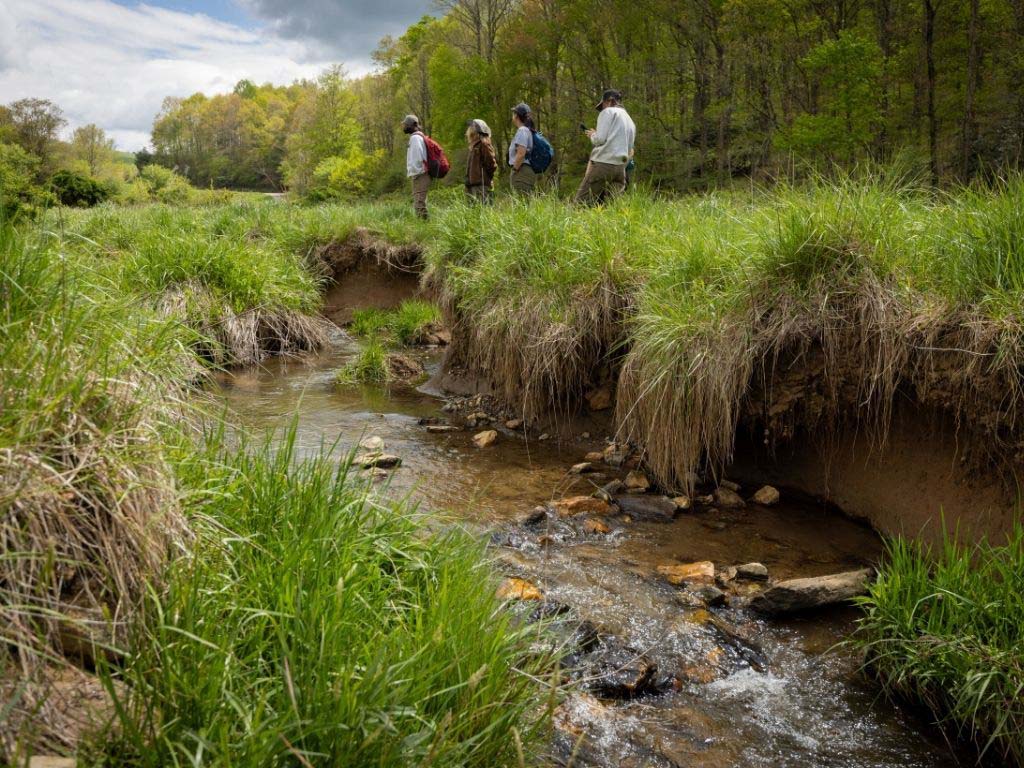
This information then shapes how we restore bog turtle habitats and bolster populations. Over the past three years, we have worked with partners and landowners to restore 10 bog turtle wetlands across more than 15 acres. We removed invasive species and overgrown trees, installed log jams, and removed illegally constructed ditches. After Hurricane Helene, this work expanded to clearing several feet of gravel and debris from damaged bogs.
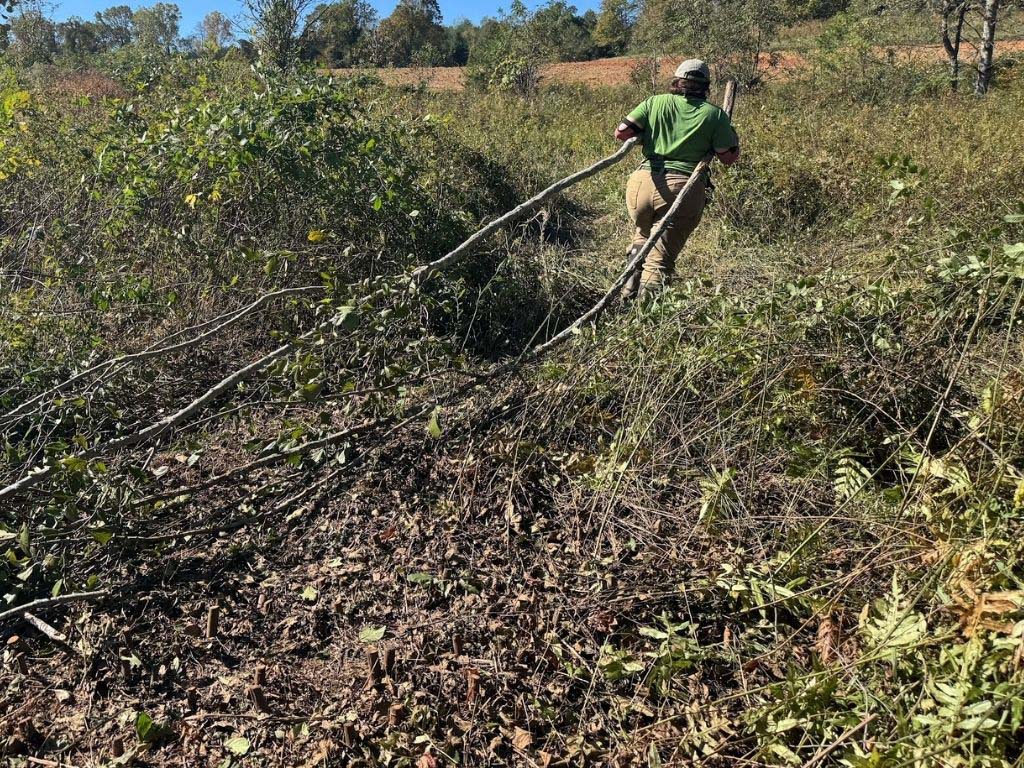
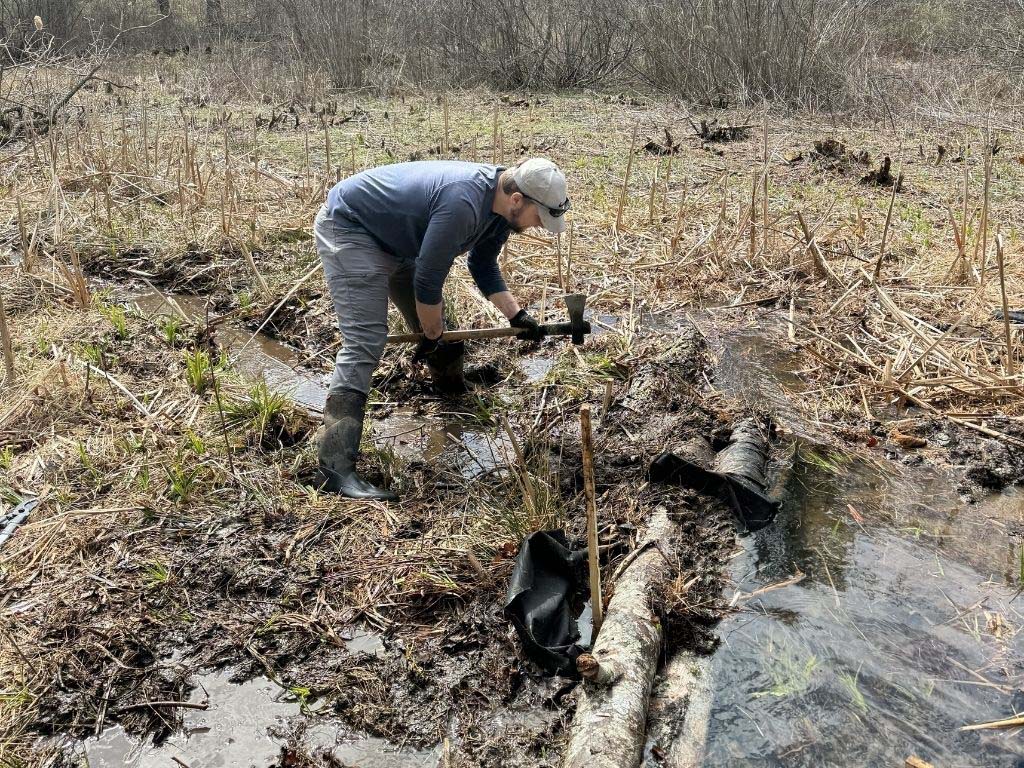
“Bog turtle populations are declining so rapidly, you can sometimes have decision paralysis about what the best conservation action is to take, but these turtles don’t have the luxury of time to figure it out,“ said Emilly. “Creating new habitats or restoring struggling habitats gives them a chance to be a healthier population, expand their habitat, and ultimately give them better odds to survive into the future.”
Recovery after restoration often takes years, but we are already seeing encouraging signs. Water is returning to drained wetlands, bog turtles have been observed nesting after Hurricane Helene, and native vegetation is recovering where invasive plants were removed.
Each turtle and nest Lettie, Peat, and Stevie find paints a clearer picture of population strength, habitat health, and where restoration is needed most. Protecting imperiled species starts with knowing where they are. For bog turtles, building resilient, connected populations may start with a determined dog following a scent through muddy wetlands.