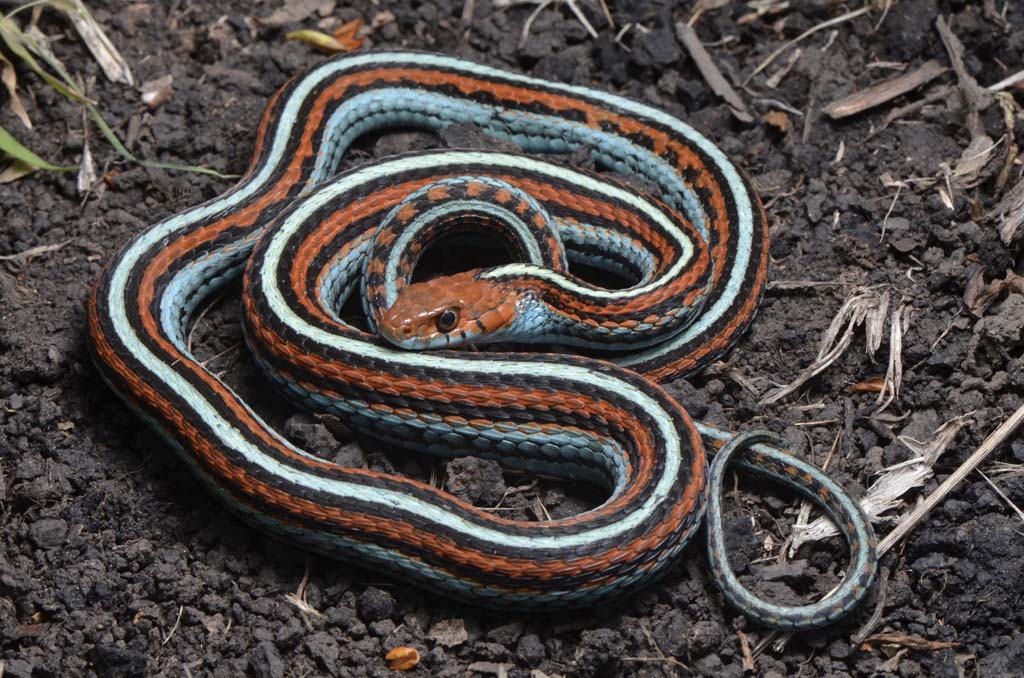
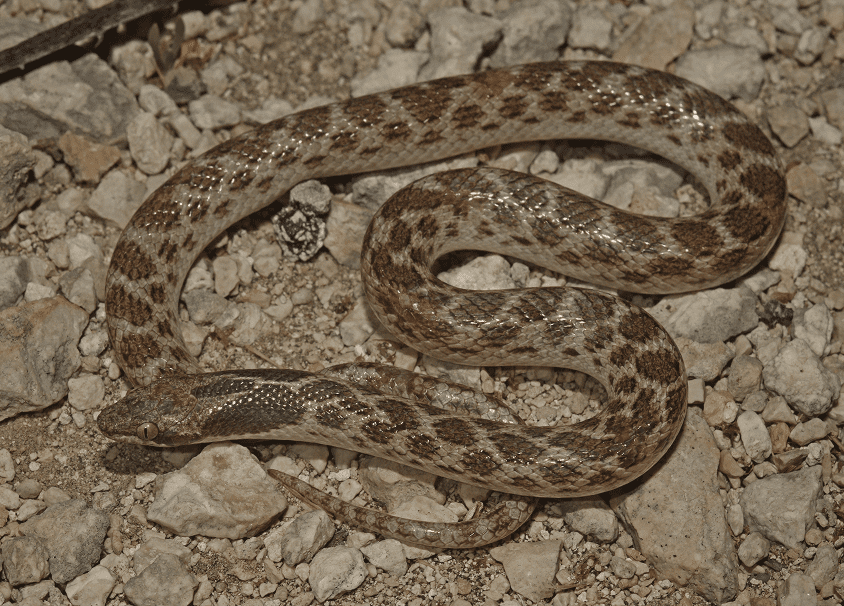
SCARLET SNAKE, © Ryan McGreevy
A Message from our Executive Director
Recovery does not happen quickly.
It isn’t a single release of headstarted individuals, a single grant, a single restoration, or even a single year of effort. It is patient, deliberate work carried out over time, often in uncertainty, often in difficult conditions, and often without recognition. It requires showing up, again and again, in the places where it matters most. Across the country, landscapes are shifting. Habitats are fragmenting. Climate patterns are becoming less predictable. And many of our partners have less capacity to show up. Amphibians and reptiles, species that depend on stability more than most, are feeling those changes first and most intensely. Their declines are not isolated events; they are early signals of broader ecosystem stress. Recovery is not just about bringing species back but rebuilding resilience into the systems that support them. At the Amphibian and Reptile Conservancy (ARC), this is the work we are built to do: to be the steady hand that shows up for recovery and resiliency. ARC is operating with both reach and precision, expanding programs while becoming more targeted in where and how we act. We are building the capacity to respond when conditions change, when opportunities emerge, and when urgent action is needed. Because recovery is not static. It demands flexibility. It demands consistency. On the ground, that means adjusting strategies in real time, whether shifting field efforts due to drought or responding to storm-driven habitat loss. In some cases, it means acting before a species disappears entirely. At a broader scale, it means building systems that allow us to be more responsive and more effective over time. This year, ARC continued strengthening partnerships, expanding private lands work, and developing new tools and frameworks to guide conservation where it will have the greatest impact. This is what a steady hand looks like in practice. It is prepared. It is focused. And it is not limited to a single place or project. It is applied wherever recovery is still possible. We are strengthening our ability to do this work at scale. And scaling conservation is not just about doing more. It is about doing it well. That means connecting national strategy to local implementation. And it means ensuring that every action contributes to long-term recovery, not just short-term wins. There is a great deal of progress reflected in this report, new programs, key hires, and expanding impact across PARCAs (Priority Amphibian and Reptile Conservation Areas). ARC is showing up where it matters, and we are staying long enough to make a difference. That kind of work requires support. Your support gives us the flexibility to act when it counts, stay engaged for the long term, and invest in the systems that make recovery possible. Recovery takes a steady hand. And because of you, ARC can provide it. Together, we are ensuring that amphibians and reptiles, and the ecosystems they anchor, can keep moving towards recovery and resilience.With gratitude, JJ Apodaca
Table of Contents
© Grace Laskey
A National Strategy for Recovery Across PARCAs
© Maya Morales
Recovery starts with knowing where to stand. Not every place carries the same weight when it comes to conservation. There are places across the country that are disproportionately important for the recovery of amphibians and reptiles.
These critical strongholds, known as PARCAs, are identified through a rigorous process that blends cutting-edge science with on-the-ground expertise.
By zeroing in on the places where conservation can have the greatest impact, we are able to take a steady, strategic approach, working not just to protect individual species, but to rebuild the ecosystems they depend on. That means healthier wetlands, forests, and grasslands, with benefits that extend far beyond amphibians and reptiles to entire biological communities and the people connected to these landscapes.
Our actions are deliberate and targeted, but their impact doesn’t stay contained. Restoring a wetland improves water quality downstream. Stabilizing a population strengthens genetic resilience across a region. Rebuilding habitat in one PARCA can reconnect fragmented landscapes and create pathways for recovery well beyond its boundaries.
From the Southern Appalachians to the deserts of the Southwest, each PARCA represents both urgency and opportunity. These are places where species are under pressure but where recovery is still within reach if we act quickly and strategically.
2025 Conservation Plans by PARCA
No Data Found
© Steph Haan-Amato
335
PARCAs identified across the US
15
PARCAs added
35
PARCAs with boots on the ground
13
US states with active projects
156
Partners Supporting PARCAs Nationwide
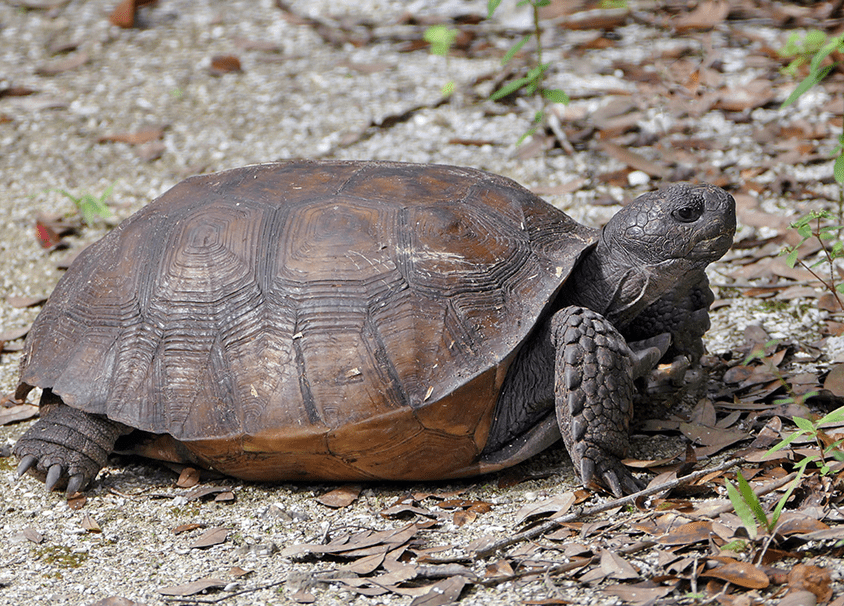
The Apalachicola and St. Marks PARCAs in Florida’s Panhandle were once dominated by widely spaced longleaf and slash pines with patches of southern wiregrass and wildflowers interspersed. Now, some of these landscapes look so overgrown that it’s hard to imagine bringing them back to the open forests they once were, where imperiled gopher tortoises and red-cockaded woodpeckers thrived.
Longleaf pine ecosystems historically experienced frequent, low-intensity fires. Without regular fire, dense woody plants take over, forming such a thick understory that native plants can no longer grow, including the species that amphibians and reptiles need.
In recent decades, millions of acres of longleaf pine have been replanted, helping restore much of the forest framework. But planting trees only gets us part way to a functioning ecosystem.
Seasonal ponds and other wetlands within these forests are especially important for the life cycles of frogs and salamanders, but because of the reduced frequency of fires, they now require more active management to remain functional.
In these PARCAs, we’re using mechanical thinning and manual removal to reduce undergrowth of plants like wax myrtle and swamp titi, along with invasive plants such as privet and climbing fern. These species can overtake wetlands and woodlands, shading out plants that amphibians use to lay their eggs and changing the water cycles of these habitats.
With restoration, these systems show just how resilient they can be. In the resulting open wetlands and healthy longleaf pine habitats, native plants, amphibians, reptiles, and other wildlife have the conditions needed for their recovery.
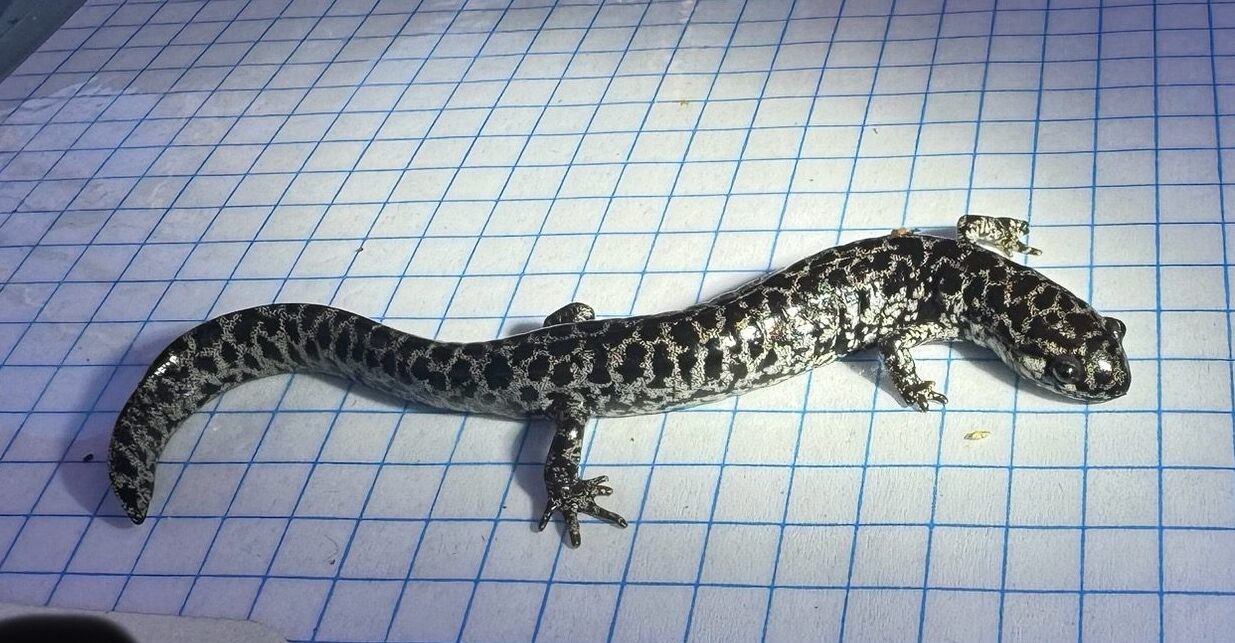
Among the species benefiting from these restoration efforts is the frosted flatwoods salamander, one of North America’s most at-risk amphibians. With only a handful of populations remaining in the wild, the seasonal wetlands these salamanders rely on for breeding are essential to their survival.
To give them a fighting chance, we’re headstarting frosted flatwoods salamanders. Eggs are collected from the wild and transported to controlled environments, where they develop into larvae (like tadpoles) protected from predators and poor conditions before being released back into restored wetlands. This significantly increases their odds of survival and helps bolster populations where habitat conditions are improving.
This work reflects what makes the PARCA approach effective. Recovery depends on restoring the ecological conditions species evolved with, then applying targeted actions to help populations that have become too small or vulnerable to rebound on their own. Across these Florida Panhandle landscapes, that means rebuilding habitat, strengthening vulnerable populations, and working with public and private partners to recover one of the Southeast’s most biologically important places.
© Nicole Dahrouge
Recovery Across Boundaries on Private Lands
HOUSTON TOAD, © Zach Truelock
Across the country, some of the most critical habitats for imperiled amphibians and reptiles exist outside of public lands, making private landowners essential partners in recovery.
From the Post Oak Savannah of Texas to the mountain bogs of the Appalachians and the streams of the Southeast, private lands provide the wetlands, forests, and grasslands that species like the Houston toad, Chiricahua leopard frog, eastern hellbender, frosted flatwoods salamander, and reticulated flatwoods salamander rely on.
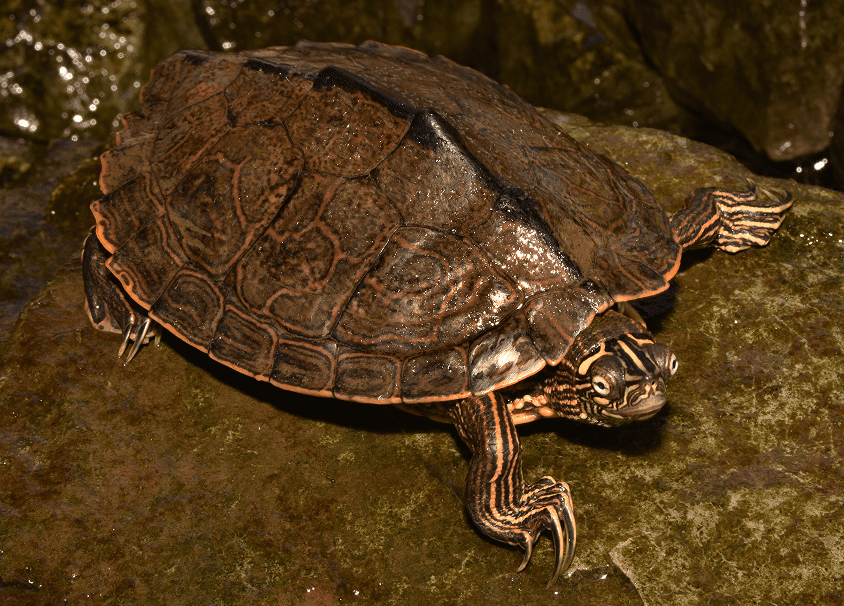
We’re key partners on critical programs such as the US Department of Agriculture’s Southern Waters Framework, which connects landowners with technical support and financial incentives. These benefits help people protect aquatic systems on their property, supporting species like the Neuse River waterdog, Black Warrior waterdog, and flattened musk turtle.
By working with ranchers, farmers, and other landowners, we’re helping to stabilize streambanks, restore native vegetation, and implement sustainable land practices. These efforts not only benefit individual species, such as Carolina gopher frogs, narrow-headed gartersnakes, and northern Mexican gartersnakes, but also strengthen ecosystems and create ripples of recovery across entire watersheds.
© JJ Apodaca
159
Private lands impacted
12,629
Acres of habitat improved on private lands
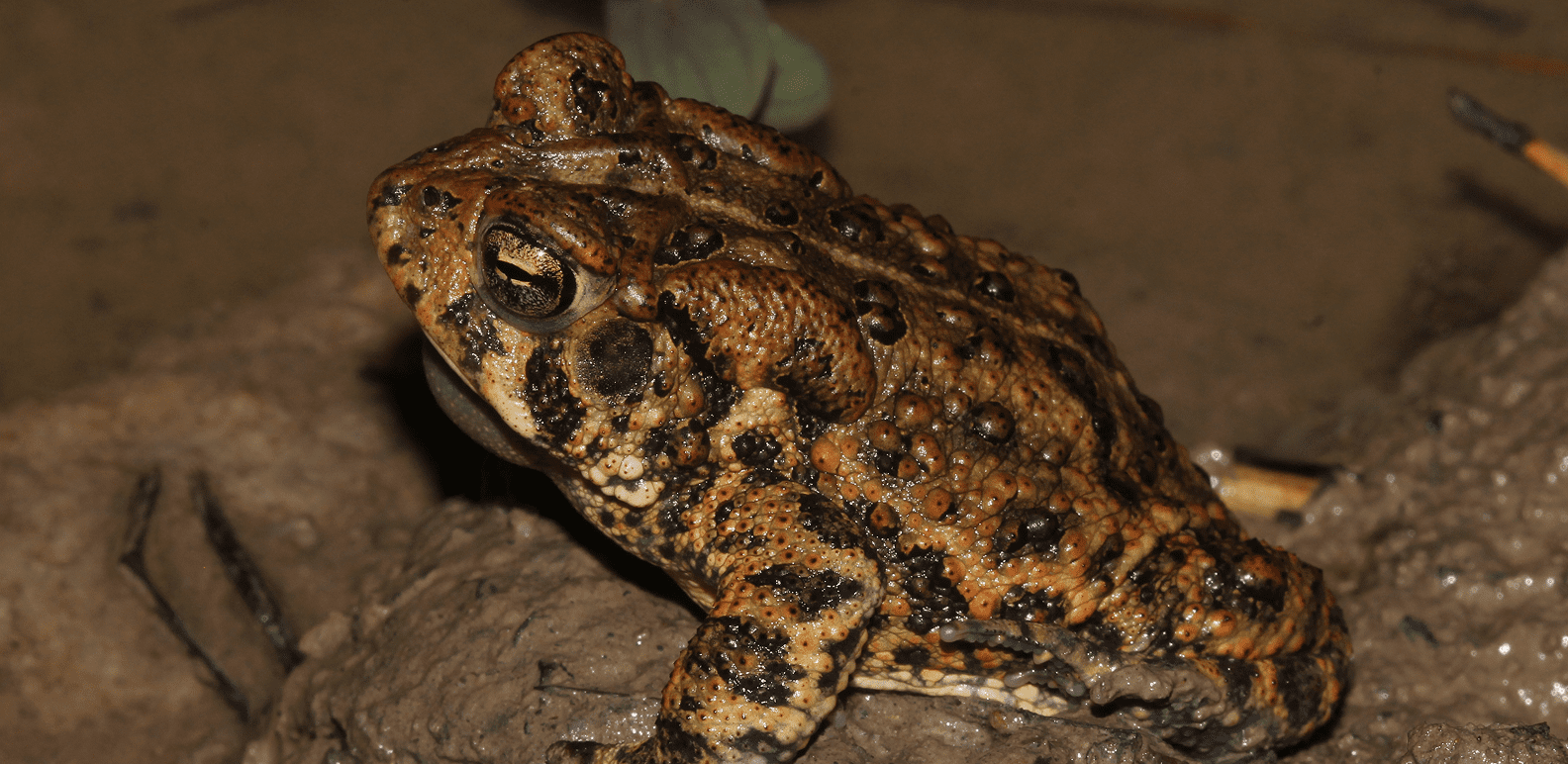
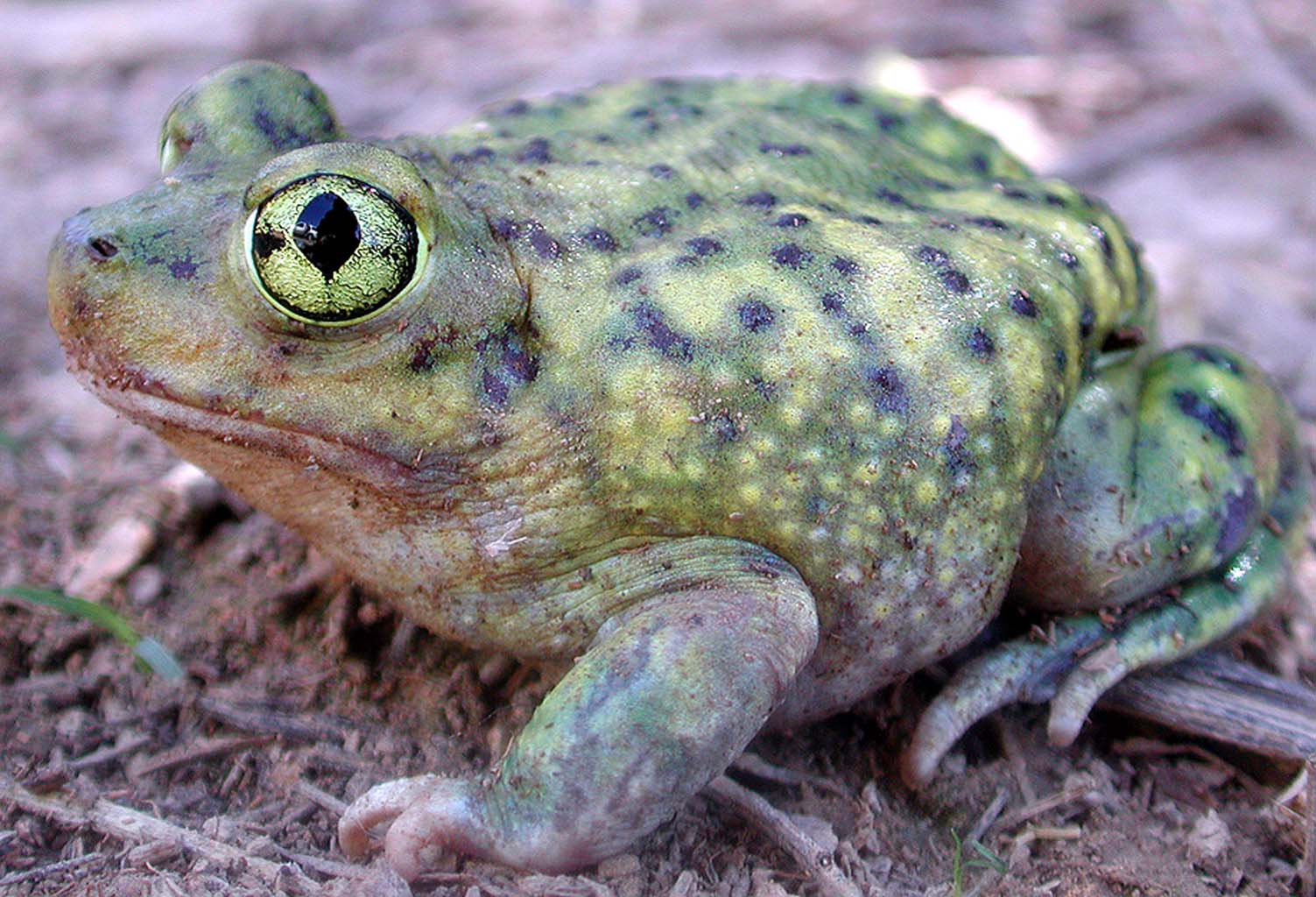
If we could step back in time to the end of the 19th century on a warm spring evening in central Texas, we’d likely hear the peaceful trills of the Houston toad in a landscape dominated by grasses and short plants, dotted with clumps of trees. This unique ecosystem, called Post Oak Savannah, is part of the broader continuum of savannah and grassland habitats across the Southern US.
Because this habitat has largely been lost, the Houston toad, one of the first amphibians federally listed as Endangered, now persists in small, scattered pockets. Today, the toad is only found in the remaining patches of habitat between Houston, Austin, and Dallas.
Because much of its historic habitat is on private land, public lands alone cannot support the full recovery of species like the Houston toad. Most of the critical Post Oak Savannah habitat that remains is on private property.
Restoration in these areas is crucial, because the open, sunlit conditions that once supported grasses and small plants have been replaced by dense understory due to fire suppression and invasive species. These thick, shrubby plants block light from reaching the ground and gradually eliminate the grasses and small plants Houston toads need for cover.
The overgrown forests are also of little value to Wild Turkeys, Northern Bobwhites, and Texas horned lizards, which were all much more common in the Post Oaks historically.
That’s why, alongside our partners, we’re restoring and connecting critical habitats on private and public lands in the Sugar Sands PARCA. Efforts include mechanical brush removal, prescribed fire, and sustainable grazing practices to rebuild the open savannah structure essential for the toads’ survival.
We work with private landowners, ranchers, and farmers, to provide the technical support and conservation incentives needed to implement these management practices.
These actions, combined with Houston toad captive breeding programs conducted by zoo and university partners, help stabilize populations and give the species a greater chance of recovery.
Large-scale habitat restoration, coupled with population-boosting interventions, demonstrates the impact of the PARCA approach. Recovery is not a single action or a single year of work. It is a deliberate, ongoing effort to partner with landowners to restore the ecosystem and strengthen populations. It’s a powerful, community-centered way to recover one of the region’s most important places for amphibians and reptiles.
© Emilly Nolan
Targeted Interventions for Recovery
CHIRICAHUA LEOPARD FROG, ©Becca Cozad
Sometimes, the difference between a species declining and surviving comes down to whether someone acts for its recovery. When drought shrinks wetlands or when storms destroy habitats, targeted actions like rescues and headstarting (captive raising) become essential to keeping species on the landscape. In healthy, connected systems, species might move to new sites, but those corridors are often no longer available.
In 2025, we partnered with agencies, zoos, and other collaborators across multiple PARCAs to carry out strategic interventions at critical times.
In Arizona, teams mobilized to rescue more than 1,400 Threatened Chiricahua leopard frogs from drying ponds, helping retain the genetic diversity these populations need to persist.
Farther east, imperiled Carolina gopher frog tadpoles were collected from rapidly disappearing breeding sites in South Carolina. Some of these tadpoles were headstarted in partner facilities, and some were moved to more stable wetlands, preventing the local loss of this generation. In Florida and Georgia, Threatened frosted flatwoods salamander eggs and larvae (like tadpoles) were rescued from drought-stricken habitats, ensuring they could continue developing.
This approach is reflected again in the Hickory Nut Gorge green salamander story that follows. Across each of these efforts, our strategy is the same: work together with partners, respond with precision, and act before it’s too late.
© Sydney Sheedy
1,759
Headstarts released
2,962
Rescued amphibians and reptiles
Hurricane Helene brought unprecedented rainfall to the Southern Appalachians in late 2024, reshaping entire landscapes in a matter of hours. Hillsides collapsed, and centuries-old habitats were suddenly gone.
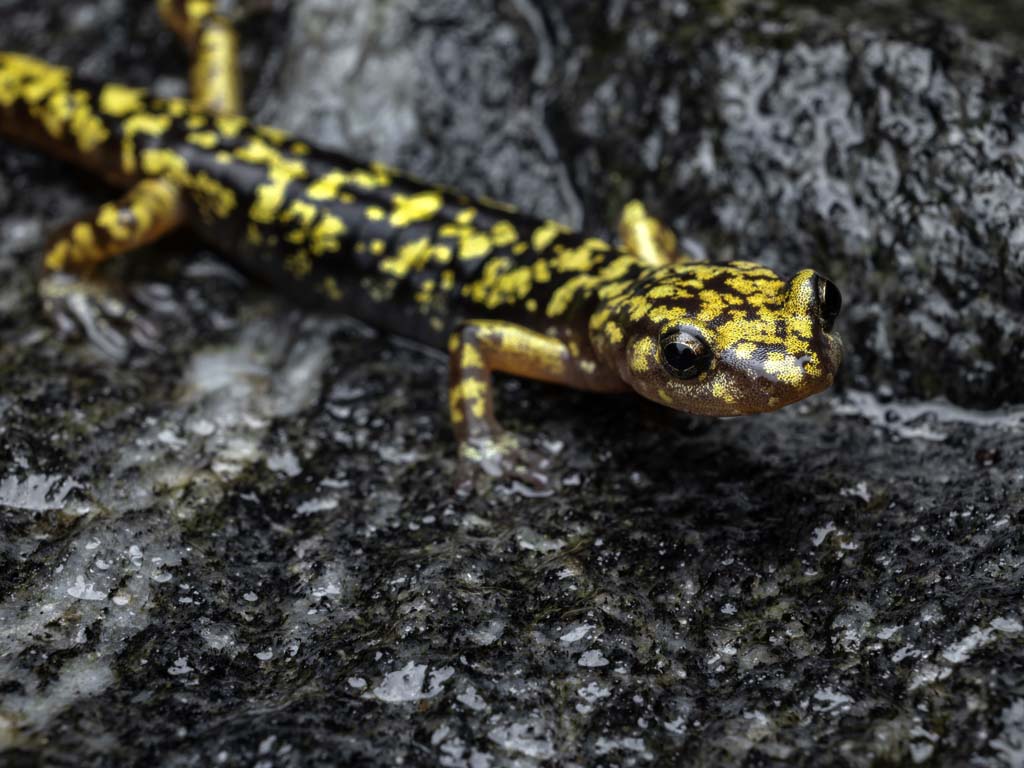
Recovery couldn’t wait for conditions to stabilize. For the Hickory Nut Gorge green salamander, which is among the most endangered salamanders in the world, the scale of the disaster prompted an immediate and ongoing response throughout 2025.
The Hickory Nut Gorge green salamander was first described in 2019 by a team led by ARC Executive Director JJ Apodaca. The species is found only within one gorge of the mountains of North Carolina, where it occupies cliff faces and forested slopes.
Because these habitats are high above the rivers and seemed far enough away from flooding, we thought the salamanders might be safe when Helene first struck. But as the scale of the storm became clear, so did a different threat. More than 40 trillion gallons of rain fell across the region, softening the ground and triggering landslides that reshaped entire hillsides.
Once the rain stopped, some sites appeared intact, offering a brief sense of hope. But when we surveyed the location of one of the most important populations by drone, the full extent of the damage became clear. The habitat had been destroyed.
Before the storm, an estimated 300 to 500 Hickory Nut Gorge green salamanders remained across a handful of isolated populations. The site lost to the landslide likely supported a significant portion of that population. We could not wait. We had to act.
Because this species depends on mature forests and moss-covered rock faces, habitat restoration is not an immediate option. Translocation had never been attempted and carried significant risk.
Instead, we worked with partners to rescue individuals and establish a captive population. This effort brought together the North Carolina Zoo, the US Fish and Wildlife Service, the North Carolina Wildlife Resources Commission, The Nature Conservancy, and dedicated volunteers.
Reaching the site required navigating a newly rechanneled river and climbing through forests reduced to tangled debris. Despite these challenges, we found salamanders within the remaining rock outcrops and began transporting them to safety.
Today, 25 Hickory Nut Gorge green salamanders are in care at the North Carolina Zoo. This founding population represents a critical step toward future reintroductions.
In the midst of widespread habitat loss, a small number of individuals can represent a way forward. This targeted action reflects what it takes for recovery: responding quickly, collaborating with dedicated partners, and showing up when it matters most.
© Becca Cozad
Turning Big Data into Big Wins for Amphibians and Reptiles
BOG TURTLE, © Emilly Nolan
Finding a species is only the beginning. From there, data drives the actions that make recovery possible.
Simply locating species often requires significant time and effort. Many amphibians and reptiles are small, secretive, and well camouflaged, making them easy to miss and difficult to study. Whether it’s a trace of DNA in a water sample, a frog call captured on an acoustic recorder, or a signal from a tracked animal, each entry in every ARC spreadsheet helps us understand where species are holding on and where they’re declining.
That allows us, together with our partners, to strategically target our actions. We use data to guide habitat restoration and intervene when populations are too small or vulnerable to recover on their own. In some cases, it means headstarting or rescuing individuals. In others, it means restoring habitats that species need to persist.
This is how information becomes impact. Not just knowing where animals are but using that knowledge to help ensure they remain.
EASTERN HELLBENDER, © Ivy Bryan
65,027
Individual amphibians and reptiles detected nationwide
4,093
Sites visited
27,933
Surveys conducted
1,602
Amphibians and reptiles photographed in camera traps
346
Amphibians and reptiles detected through eDNA
1,156
Frogs heard through acoustic recorders
© Emilly Nolan
Vision of What Lies Ahead
© Jesse Rhodes
As we look ahead, we know that the work of recovery doesn’t mean starting over. It means building on momentum. Across ARC’s programs, we’re continuing to move from understanding where species are and what they need to applying that knowledge in targeted ways that make a real difference for species at risk.
The systems we’ve built, from monitoring to partnerships, are allowing us to respond quickly and act strategically for recovery.
We’re scaling the approaches that are proving effective. Population boosting efforts, including headstarting and captive breeding, are expanding alongside continued habitat restoration.
We’re also adapting in real time. As climate conditions shift, so do our methods. Case in point, in the coming months, we’ll use novel approaches to release headstarted frosted flatwoods salamanders during historic drought conditions in Florida.
These innovations are not one-time solutions. They’re part of an ongoing process of learning and applying what works to give species their best chance.
This work is also growing in reach. In the Southeast, through initiatives like the US Department of Agriculture’s Southern Waters Framework, we’re partnering with farmers and other landowners to restore and protect streams across entire watersheds. These efforts reduce erosion, improve water quality, and strengthen the aquatic habitats that species depend on.
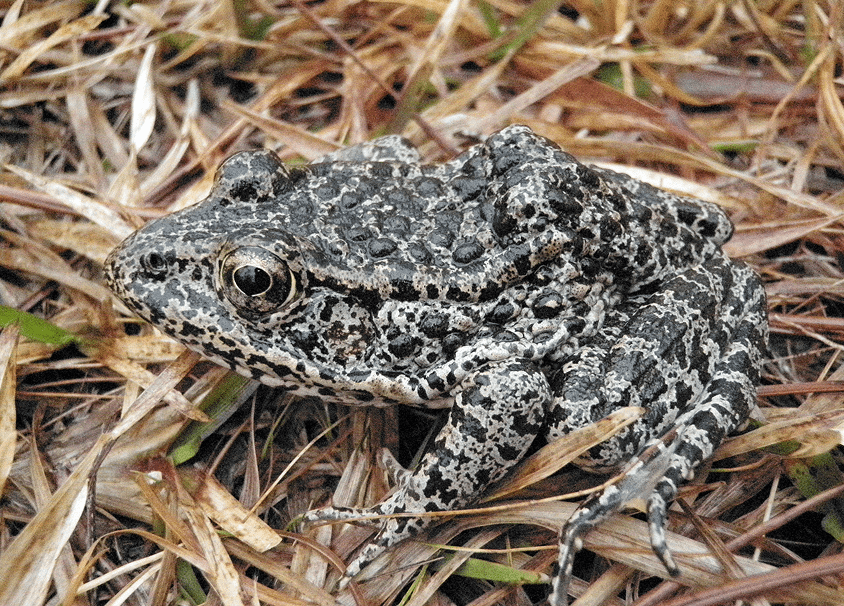
Alongside this, we’ll be expanding our presence in Mississippi, restoring more longleaf pine ecosystems, where species like the dusky gopher frog and gopher tortoise depend on active management. As in all of our programs, this work will be carried out alongside partners, from agencies to landowners, whose knowledge and commitment make recovery possible.
The path ahead is not simple, but it’s clear. By continuing to build capacity and strengthen partnerships, we’re positioning ourselves to strategically meet the challenges in front of us. Recovery takes time, but with a steady, coordinated approach, it remains within reach.
Building the Financial Foundation for Recovery
SIERRA NEVADA ENSATINA, © Jonathan Hirt
The recovery of our native amphibians and reptiles and the ecosystems they depend on is a long-term investment. We cannot be the steady hand for conservation efforts without managing the resources necessary to hold the line, locally, regionally, and nationally. It takes careful planning and discipline to be able to answer the call today, tomorrow, next year, and decades from now.
At ARC, we have worked to ensure that our fiscal responsibility matches our passion so that we can remain committed on the many fronts where we fight for recovery and restoration.
In practice, that means working to develop a more resilient funding model. In 2025, we continued to diversify our revenue sources, building partnerships with foundations, government agencies, and individual philanthropists to maximize impact across landscapes and species.
Our commitment is reflected in our financial transparency and accountability. ARC holds the highest ratings from the most trusted charity rating services: Four Stars from Charity Navigator and the Platinum Seal of Transparency from Candid. All of our financials are reviewed through independent audits.
© Nicole Dahrouge
Supporting Recovery on the Ground
Recovery is not always predictable.
What we’ve seen with our long-term, national approach is that one year, a population may be stable. The next, unexpected conditions like storms and droughts can erase entire breeding events. In these moments, the difference between loss and persistence is often whether resources are in place to act quickly.
That’s why flexible support matters.
It allows ARC to shift from long-term planning to immediate response without delay. It allows us to work across PARCAs at different stages of recovery, from places where we are still gathering baseline data to places where we are actively reinforcing fragile populations.
It also allows us to stay engaged after the emergency passes. Recovery does not end when animals are moved or habitat is stabilized. It continues through restoration, monitoring, and reestablishing resilient populations that can persist without intervention.
Your support makes that continuity possible.
Gifts of all sizes fund on‑the‑ground habitat restoration, species recovery actions, and rapid response after storms and droughts. A mix of philanthropic and public funding helps us protect more habitat, stabilize populations, and scale what works across PARCAs.

© Nicole Dahrouge
How You Can Help
© Jesse Rhodes
By supporting ARC, you’re investing in science-based conservation that is adaptive and built for long-term recovery in a changing landscape. Using the PARCA approach, our team and partners implement targeted actions to restore habitat and strengthen imperiled species populations.
Your investment connects national strategy with on-the-ground action, ensuring we can respond quickly when conditions change and focus efforts where they’re needed most. Across PARCAs nationwide, ARC is advancing species recovery through coordinated, place-based efforts, with an eye towards our future expansion into additional priority landscapes.
A variety of ways to contribute are available at ARCProtects.org/contribute. Contact us at info@ARCProtects.org to discuss legacy gifts, workplace matching, or customized partnerships.
Thank you for your support.
©Ab Abercrombie