Where Restoration Meets Recovery: Protecting Amphibians and Reptiles in the Florida Panhandle
“It’s challenging and overwhelming at first, but the visual, quantifiable results are really satisfying, not to mention vital for the wildlife here.” That’s how Nicole Dahrouge, ARC Project Coordinator, described restoring habitats in the PARCAs (Priority Amphibian and Reptile Conservation Areas) of Florida’s Panhandle.
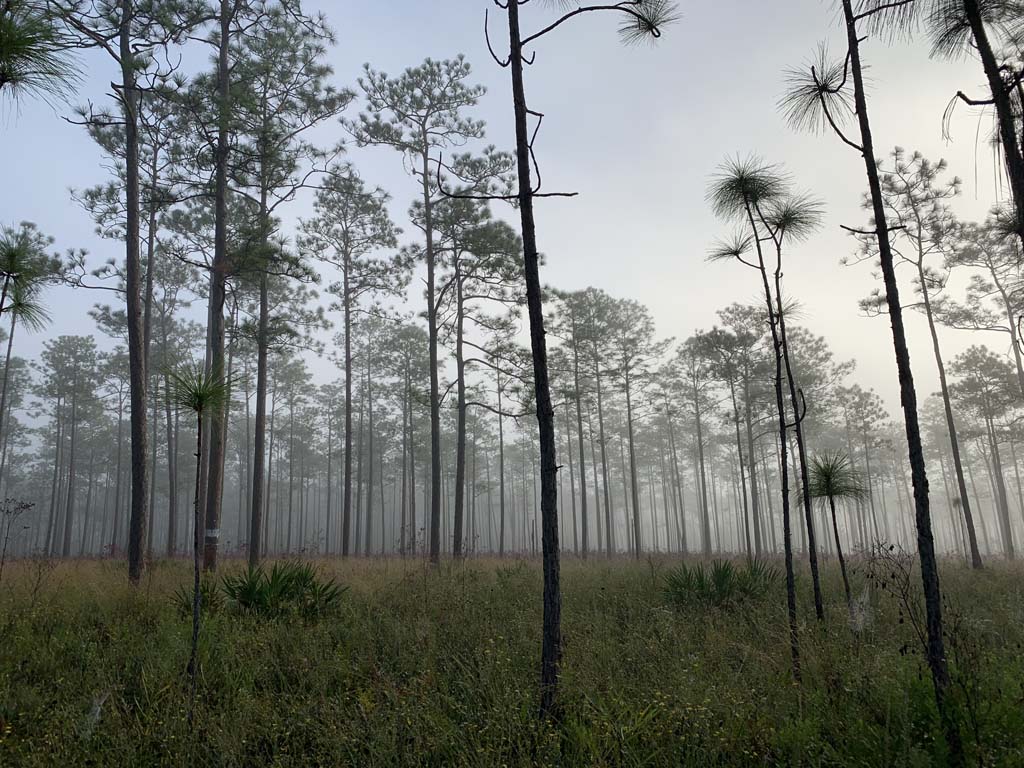
The Apalachicola and St. Marks PARCAs were once dominated by towering but spindly longleaf and slash pines with large grassy areas interspersed, and imperiled gopher tortoises and red-cockaded woodpeckers thrived here. Now, some of these landscapes look so overgrown that it’s hard to imagine bringing them back to the open forests they once were.
Many people think these forests have always been tightly packed stands of pine trees. But in a healthy state, they’re more like African savannas, made up of widely spaced trees with patches of southern wiregrass and wildflowers like the carnivorous small butterwort.
That’s because longleaf pine ecosystems historically experienced frequent, low-intensity fires. Without regular fire here anymore, aggressive shrubby plants take over. These woody plants form such a thick, dense understory that native plants can’t grow, including the species that amphibians and reptiles need.
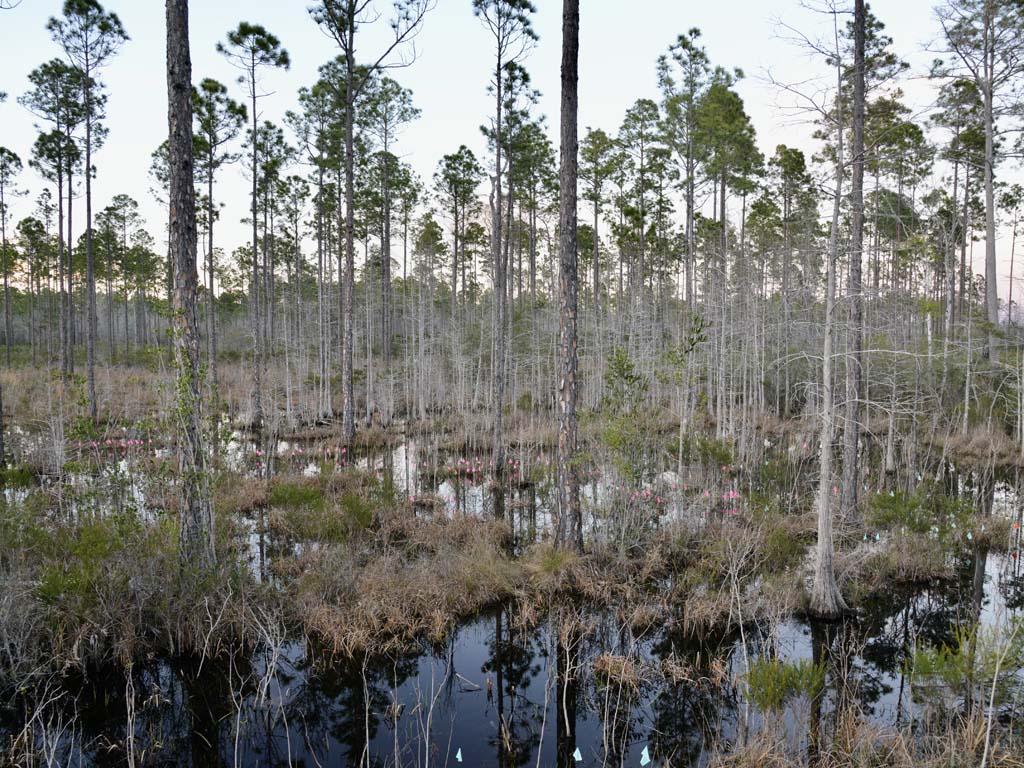
In recent decades, millions of acres of longleaf pine have been replanted through the efforts of agencies, conservation organizations, and private landowners. These plantings have restored much of the forest framework, but a key component is often left behind. Planting trees only gets us part way to a functioning ecosystem, neglecting the critical ephemeral wetlands, or temporary pools that fill during the rainiest times of the year.
Seasonal ponds and other wetlands within these forests are especially important for the life cycles of frogs and salamanders. But because of the reduced frequency of fires, they now require more active management to remain functional.
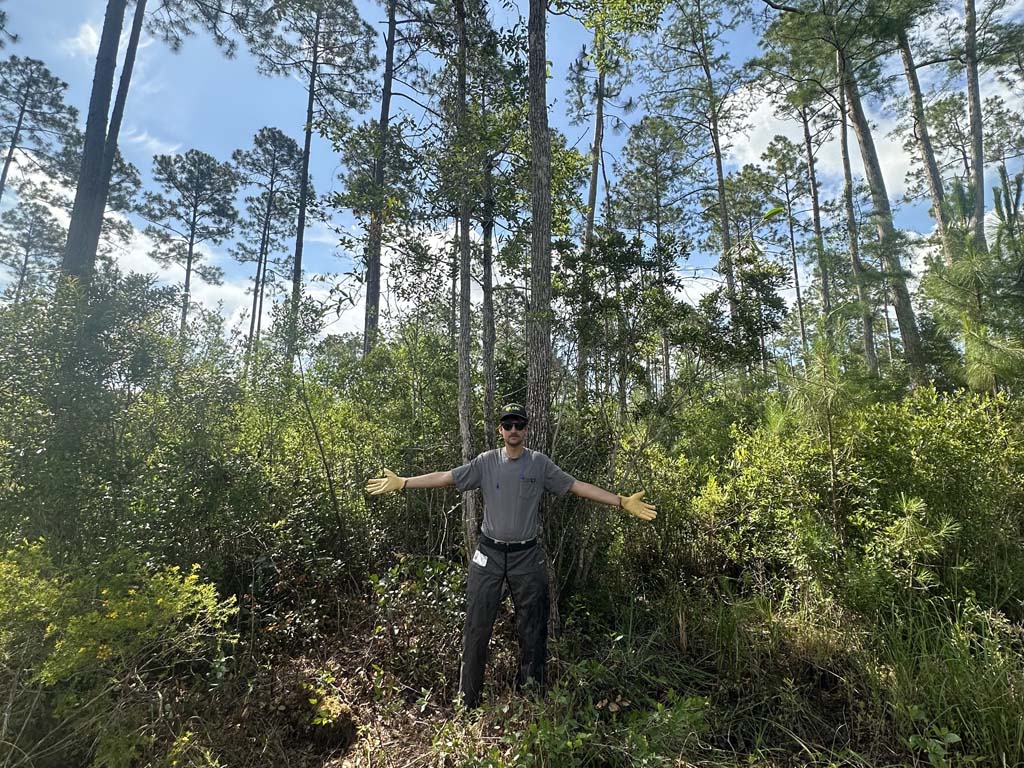
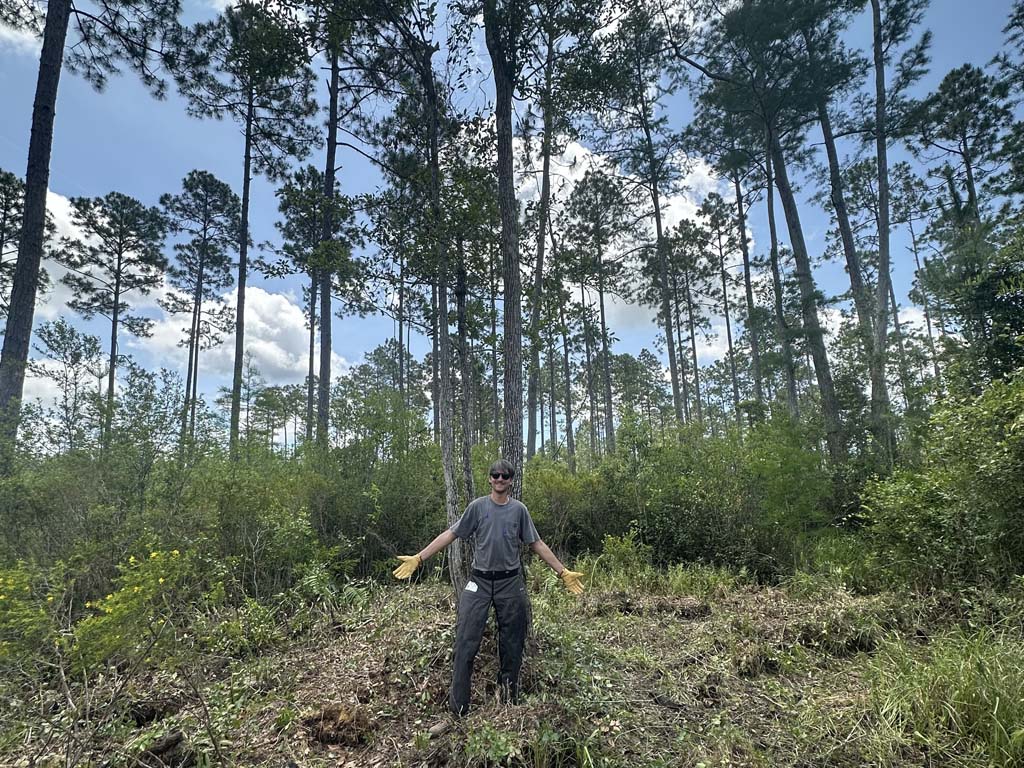
We’re using mechanical thinning and manual removal to reduce dense undergrowth of plants that wouldn’t have been able to gain a foothold with frequent natural fires, like wax myrtle and swamp titi. Alongside invasive plants, such as privet and climbing fern, these species can overtake wetlands and woodlands, shading out plants that amphibians use to lay their eggs and changing the water cycles of these habitats.
With restoration, these systems show just how resilient they can be. In the resulting open wetlands and healthy longleaf pine habitats, native plants, amphibians, reptiles, and other wildlife have the conditions needed for their recovery.
From Landscape-Scale Action to Egg-Scale Conservation
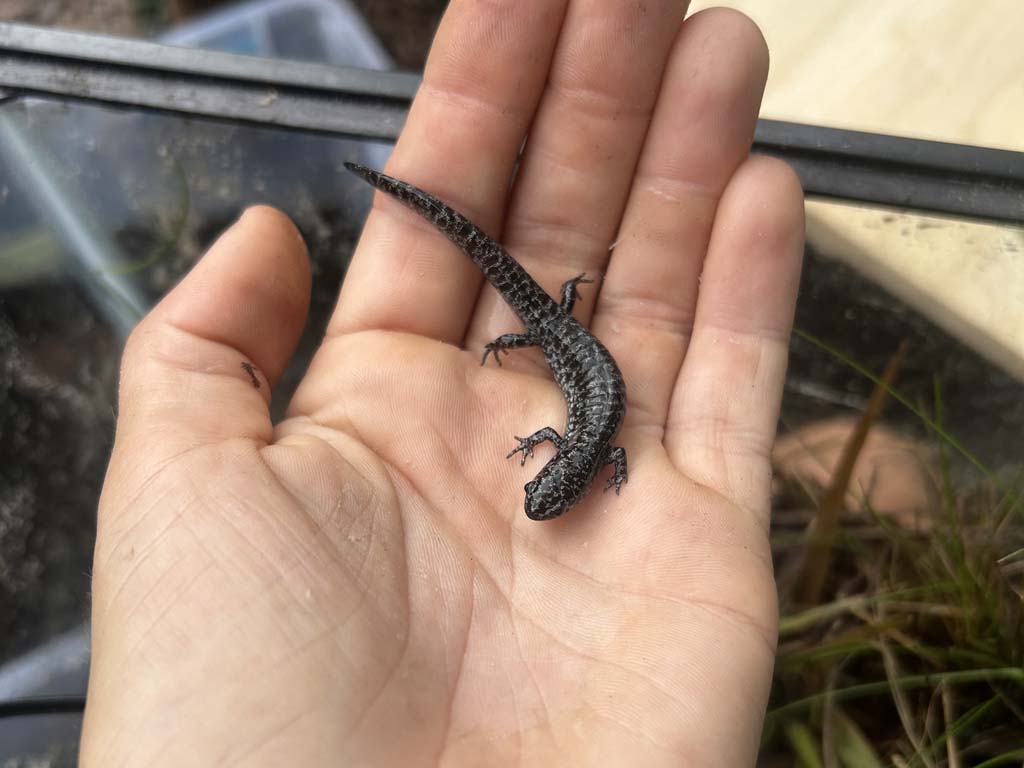
Among the species benefiting from these restoration efforts is the frosted flatwoods salamander, one of North America’s most at-risk amphibians. With only a handful of populations remaining in the wild, the seasonal wetlands these salamanders rely on for breeding are essential to their survival.
To give them a fighting chance, we’re headstarting frosted flatwoods salamanders, a hands-on but effective way to help reverse their decline. Eggs are collected from the wild and transported to controlled environments, where they develop into larvae (like tadpoles), protected from predators and poor conditions, and are later released back into the wild.
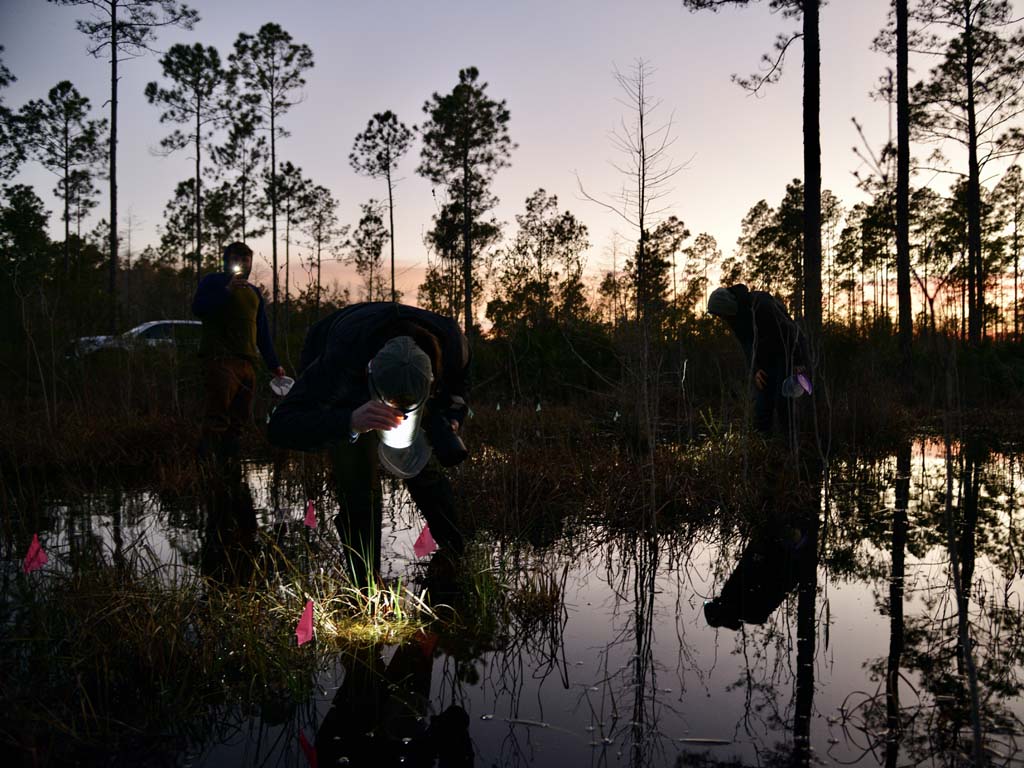
Nicole described egg collection as “the world’s itchiest scavenger hunt.” Our team members and partners crawl through dry seasonal wetlands, getting itchy and scratched up by sedges until we come across the shiny, translucent clusters of eggs laid among plants like bog button and beaksedges.
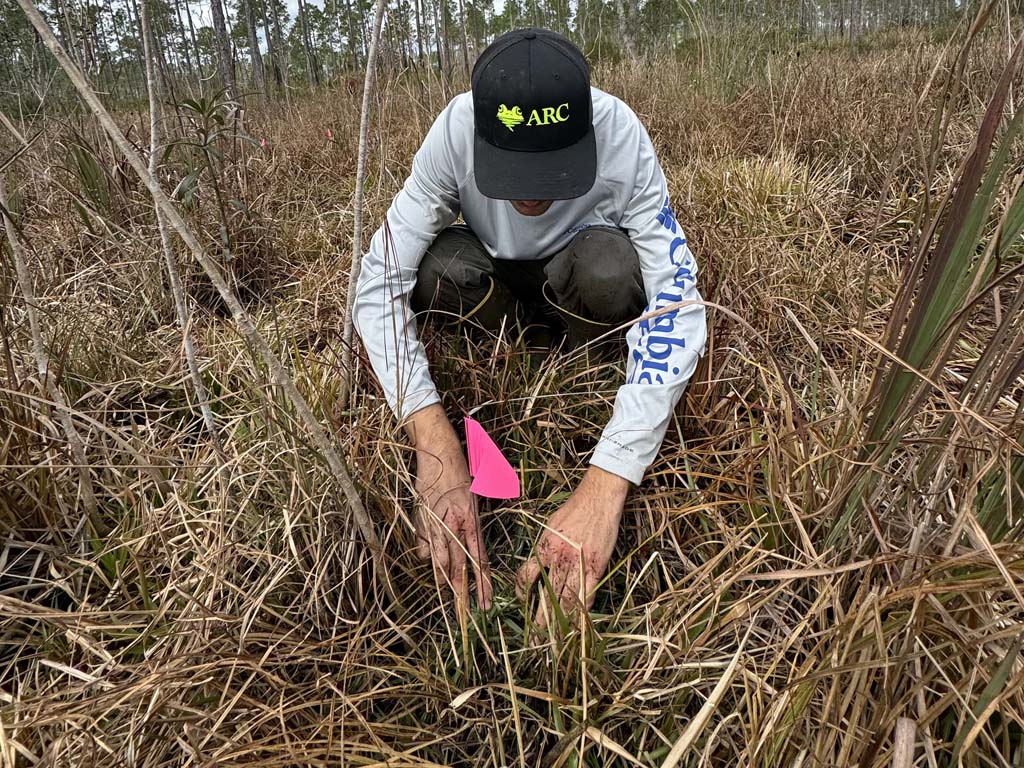
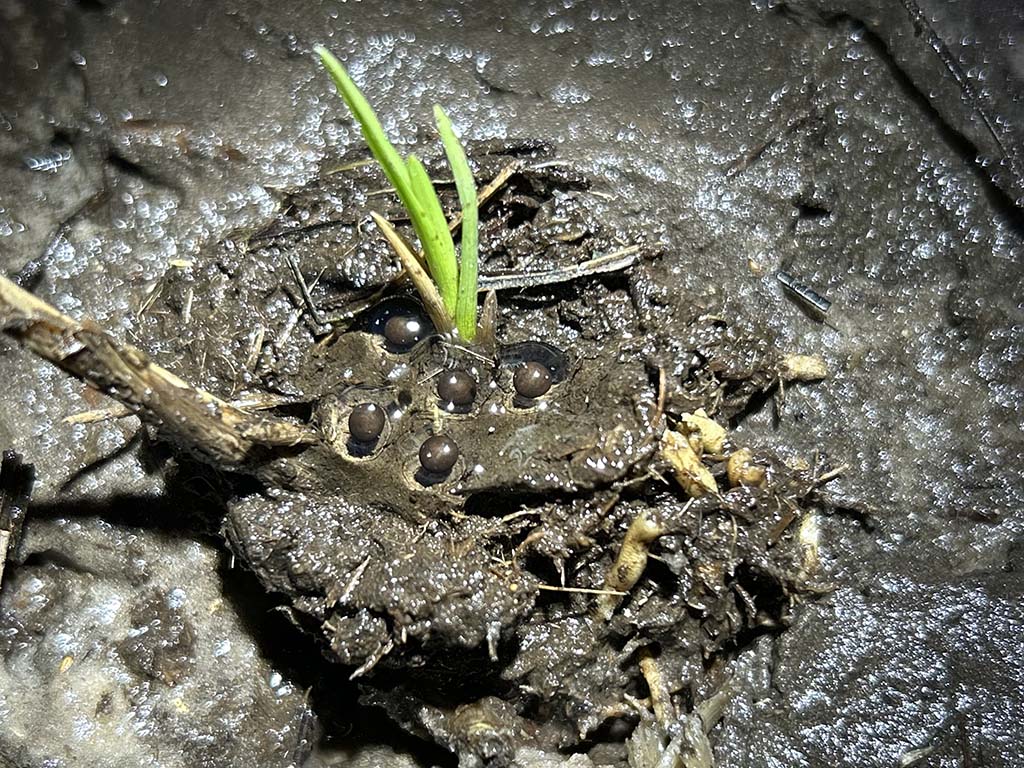
ARC Field Biologist Matthew Goetz said about finding eggs, “planting that flag in the ground when you find a cluster never gets old, aching knees and lower back notwithstanding.” Nicole added, “It’s more fun when you have a big team coming together to search, and each time you hear someone holler ‘got more’ or see another flag go into the ground, you get a big boost.”
The eggs, along with the tiny clump of soil on which they were laid, are carefully scooped out of the ground and placed into a box with damp soil. Then, once the embryos become more developed, we place them in floating shallow nursery boxes where they hatch, and we track the larvae’s eating and growth. They’re then put into larger mesocosms (outdoor tanks) to grow bigger and more resilient. Finally, when they’re in the latest part of their larval stage, we release them into restored wetlands.
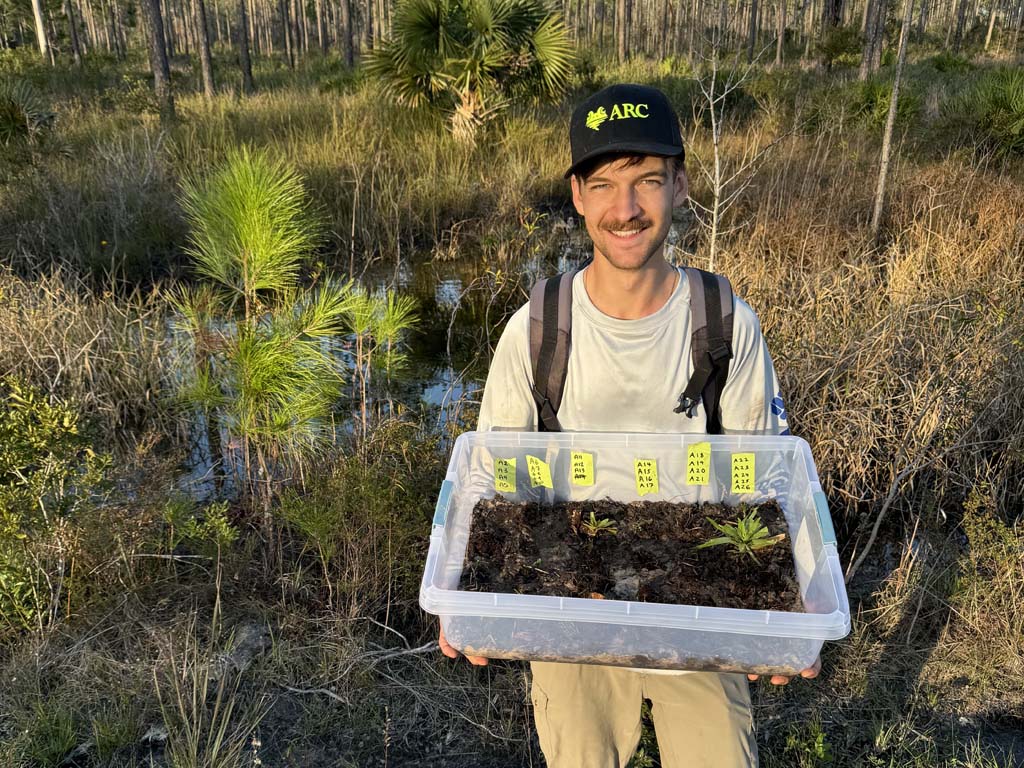
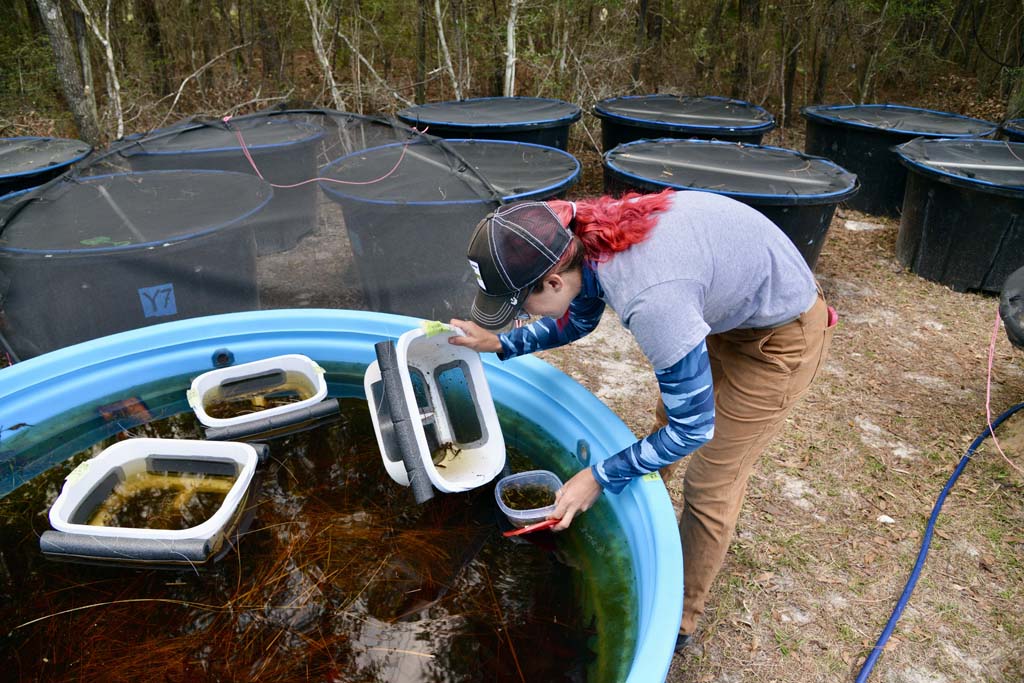
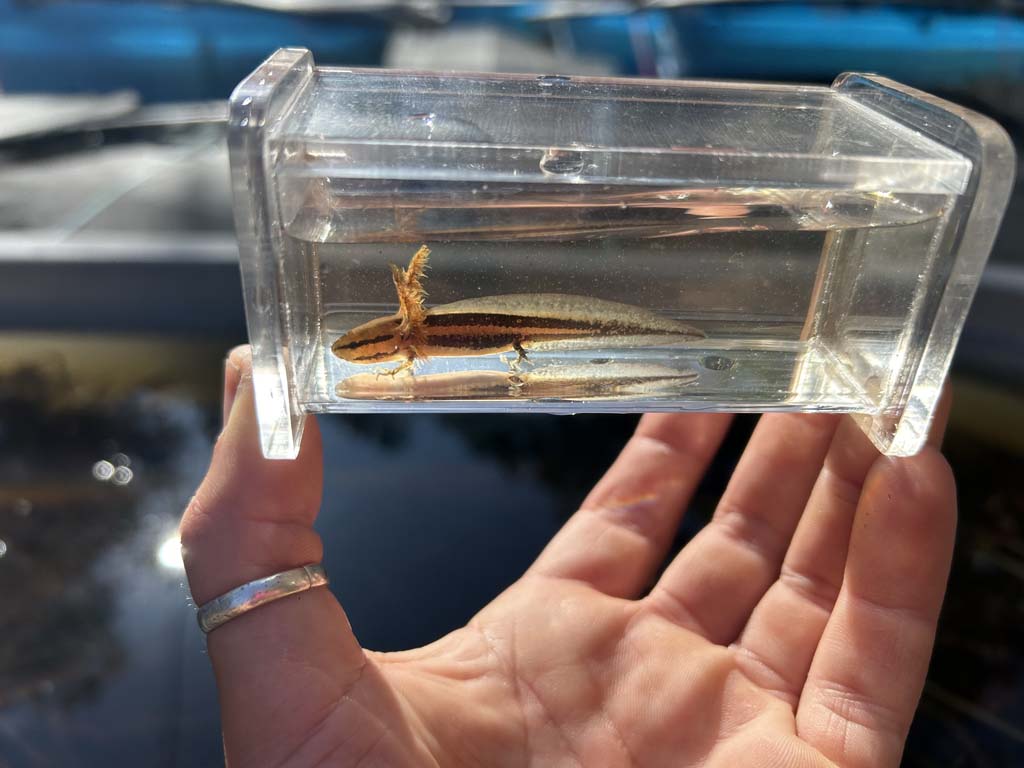
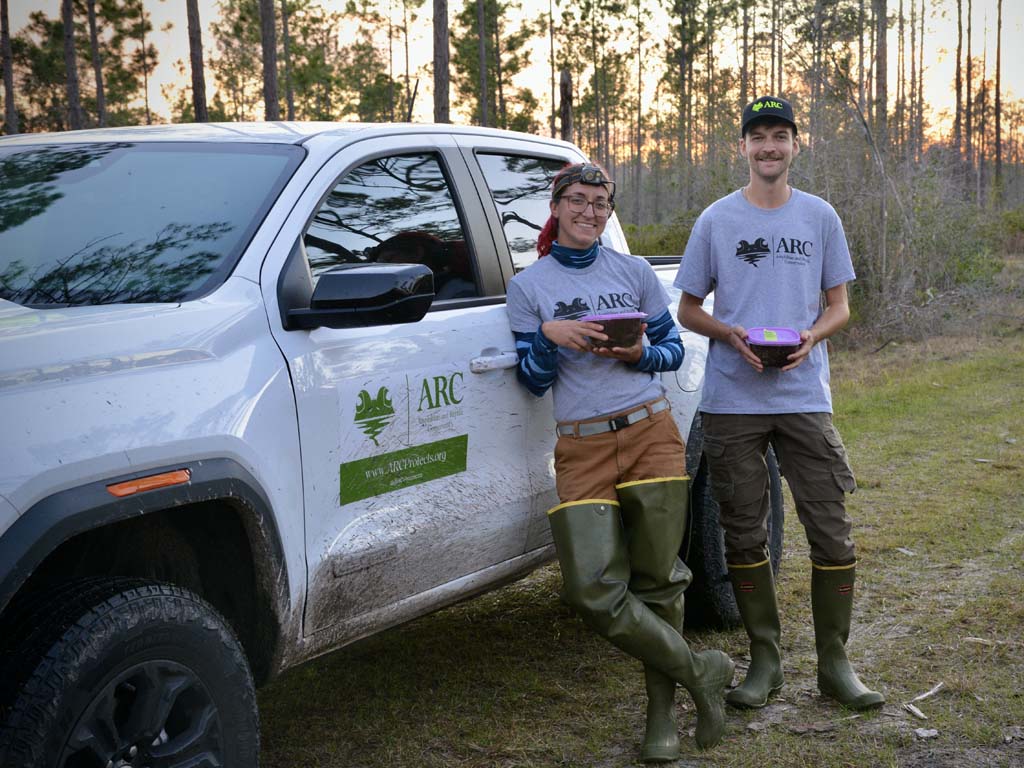
All of this significantly increases their odds of survival. As Matthew said, “The range of these salamanders is so limited that every larva we headstart and every wetland we restore is incredibly impactful to the species as a whole.”
As an additional safeguard for frosted flatwoods salamanders, we’re establishing a captive breeding program in which they’ll be bred and raised in large, in-ground, outdoor enclosures on site. PIT, or Passive Integrative Transponder, tags implanted under their skin (like a pet’s microchip) will allow us to track their growth and movements, and future offspring from these enclosures will be released into the wild to further bolster populations.
Matthew explained that this work is “a long-term commitment to giving the frosted flatwoods salamander the chance to recover, step by step.” This program provides hope for the future of the species in the face of multiple challenges, including the loss of longleaf pine forests and wetlands, habitat fragmentation, and extreme weather events.
Protection that Connects Landscapes and Communities
The Panhandle’s remaining dynamic landscapes support increasingly rare native diversity. Longleaf pine ecosystems are interspersed with sandhills, rivers, shrublands, and salt marshes, inhabited by ornate diamondback terrapins, green anoles, bobcats, river otters, and more.
Our team works across these landscapes to restore and study this diversity, spanning property boundaries and engaging a wide range of public and private partners. More than 70% of Florida’s land is privately owned, and in the US, two-thirds of Threatened and Endangered species are found on private lands.
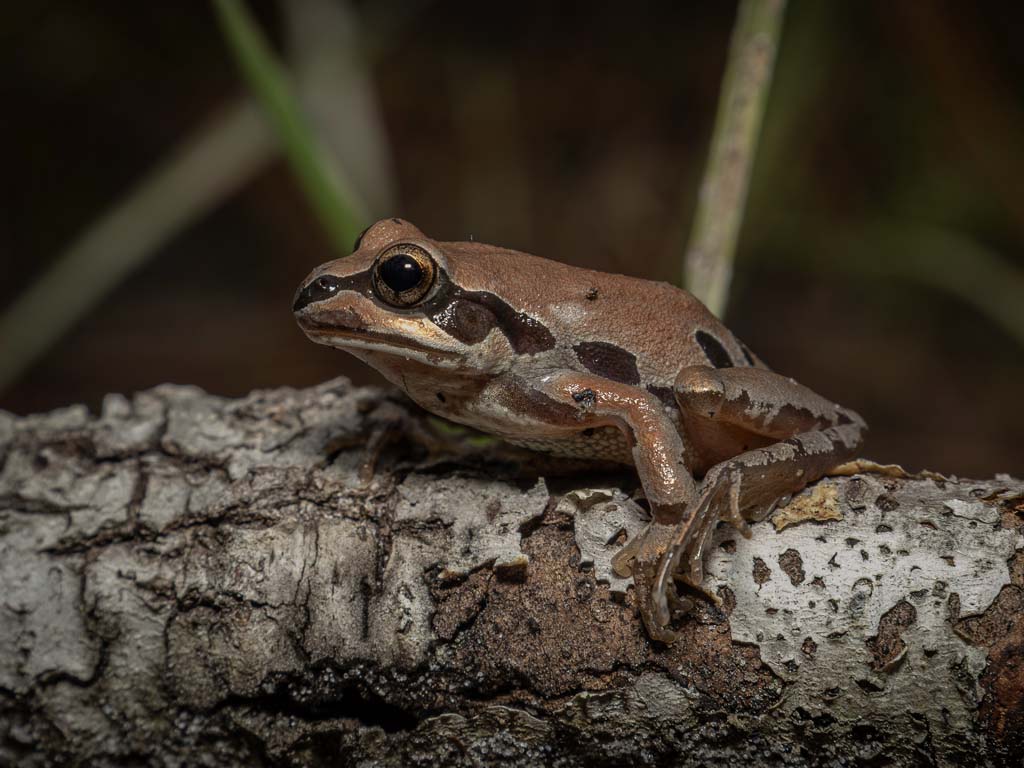
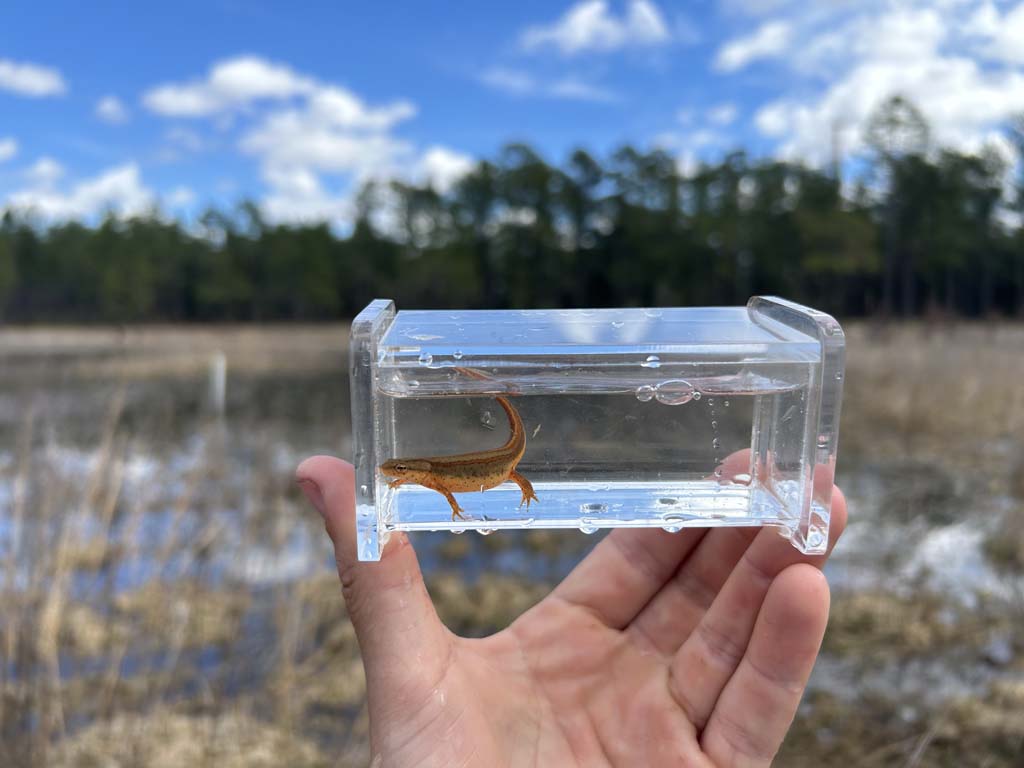
This makes private lands key to the protection of vulnerable species here. We partner with landowners to restore habitat and conduct surveys, systematically monitoring priority species including striped newts, ornate chorus frogs, gopher frogs, and frosted flatwoods salamanders.
“One property owner was delighted that we had identified a frog species she’d heard calling for years,” shared Nicole.
Collaborations with organizations and agencies like Westervelt Ecological Services, Tall Timbers, Florida Forest Service, US Fish and Wildlife Service, and Conservation Pathways enable the collective action needed to safeguard imperiled species and the Panhandle’s natural heritage.
As Matthew said, “Since human activity has pushed imperiled species to the brink, we should have the power to pull them back from it.” Together, we’re working to do just that: rebuilding habitats, recovering populations, and engaging youth and other community members in hands-on conservation.