The Hidden Risks of Sharing Your Observations: Safeguarding Wildlife in the Digital Age
“When I first realized that the information I was sharing could be exploited by poachers, I felt conflicted.”
Nancy Karraker wasn’t talking about contributing to Endangered species databases or wildlife law enforcement networks. She was talking about social media posts. Community science platforms. Research publications.
Like many people who care deeply about reptiles and amphibians, Nancy understands the joy of sharing a discovery. Most people who post these moments online do so because they’re curious and enthusiastic, and they just want to connect with others who love the natural world.
As ARC’s National Conservation Strategy Director and a leader in the Collaborative to Combat the Illegal Trade in Turtles (CCITT), Nancy has spent years studying wildlife trade and its impacts. Along the way, she began to see how even good-intentioned information could be used in ways never intended by the person who shared it.
“Asking people not to share, or to change the way they share, could deprive well-meaning people of these connections with others and stunt their curiosity,” Nancy explained. “But we also have an obligation to protect the locations of sites where we find vulnerable species.”
And that’s the tension: we want people to love reptiles and amphibians, to be curious, and to participate in community science. But we also must do that in a way that safeguards species from illegal collection, which has been on the rise in recent decades.
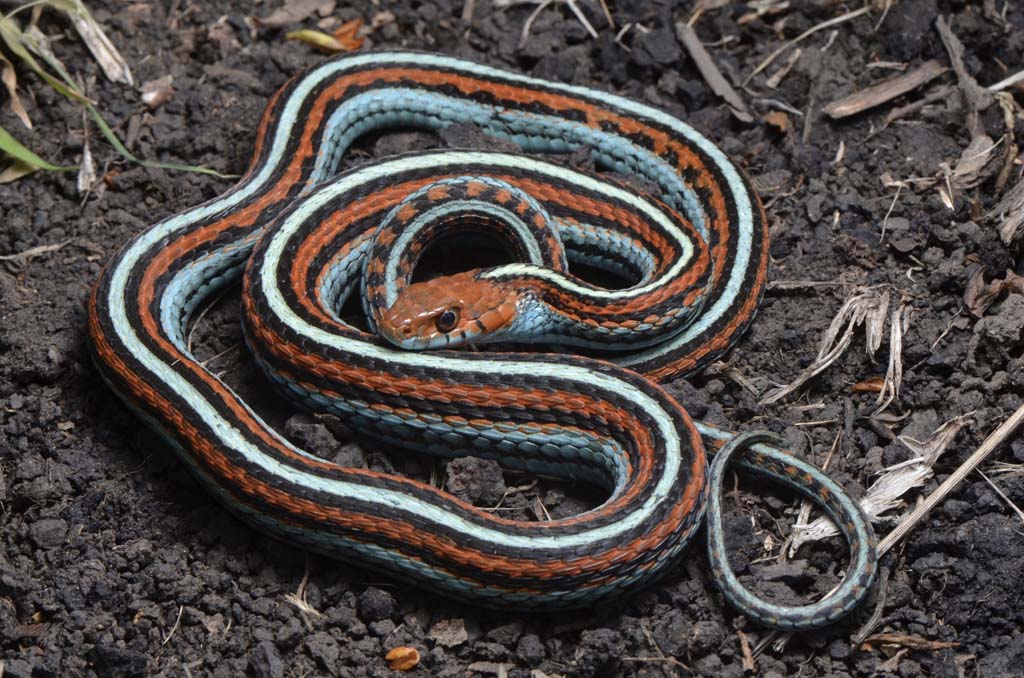
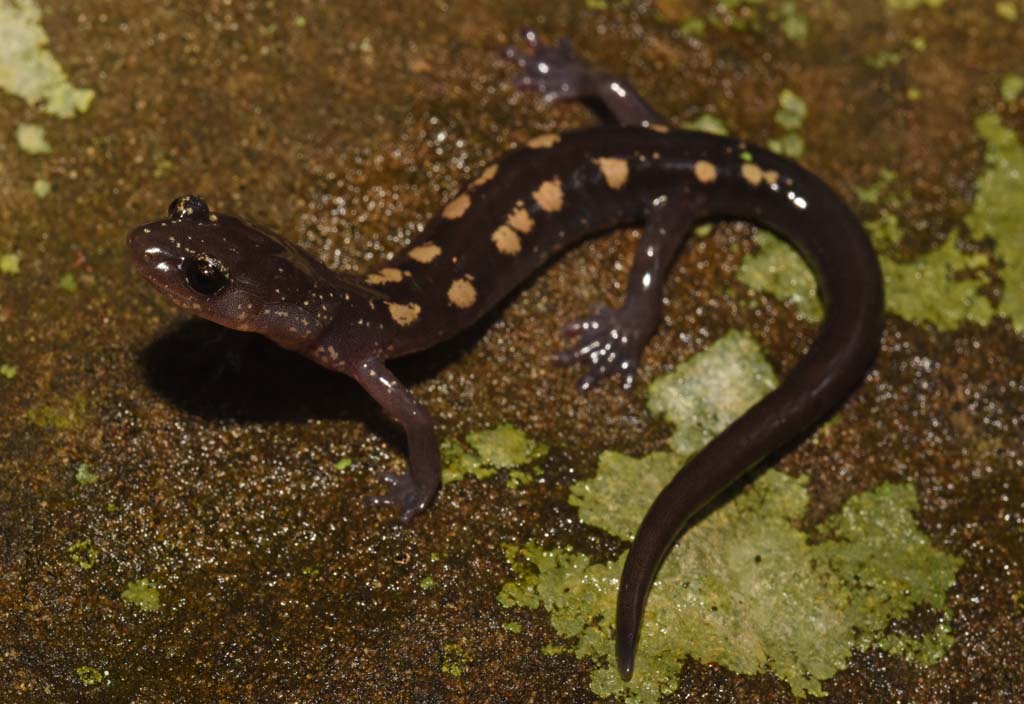
In this digital age, where information spreads instantly, and technologies can analyze landscape clues in seconds, protecting species increasingly means protecting information about them.
As ARC Turtle and Conservation Policy Director, Brooke Talley, explained, “It’s similar to parents and guardians thinking carefully about what they share online for their children’s safety. Now we must think the same way about the animals we love.”
Why Reptiles and Amphibians Are Especially Vulnerable
For rare reptiles and amphibians, even small losses can have lasting consequences. Many species grow slowly, taking years to reach sexual maturity, and when they do, they produce relatively few offspring. Removing even a small number of adults, whether through illegal collection or well-intentioned intervention, can put a population at risk.
For species already facing habitat loss and fragmentation, any losses from the population can compound quickly.
North American turtles epitomize this risk. The US boasts more than 50 species, with the Southeastern states representing one of the highest concentrations of turtle diversity in the world. They play essential roles in their ecosystems, shaping habitats and contributing to food webs. Yet their adaptations for a long life and a slow lifestyle also make them highly vulnerable to population declines.
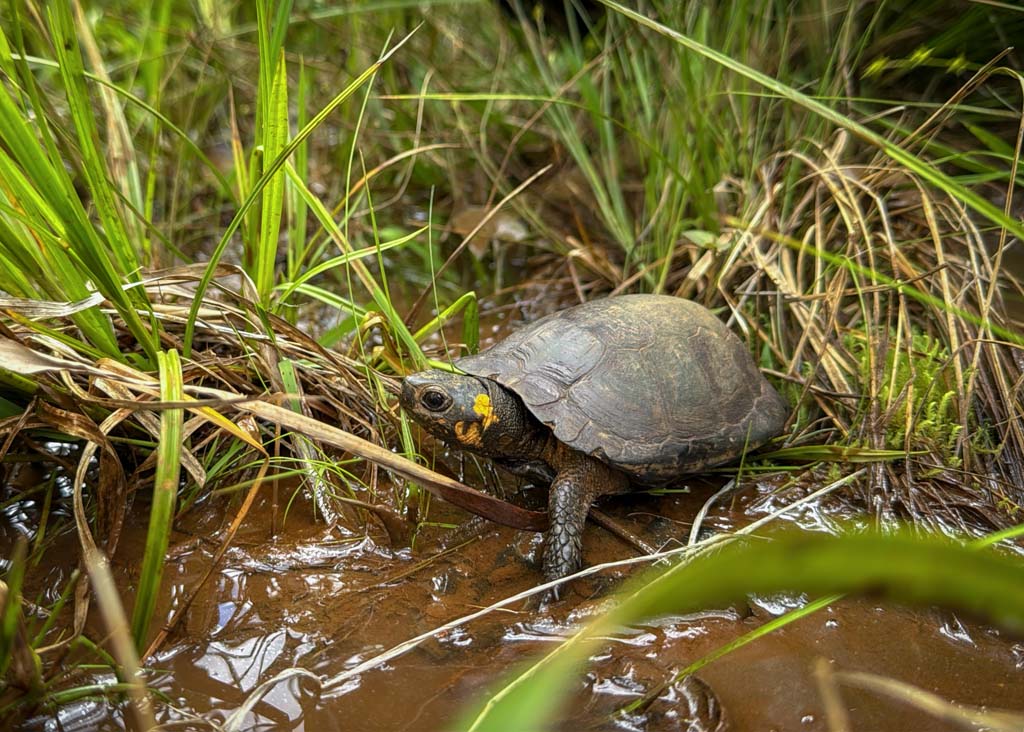
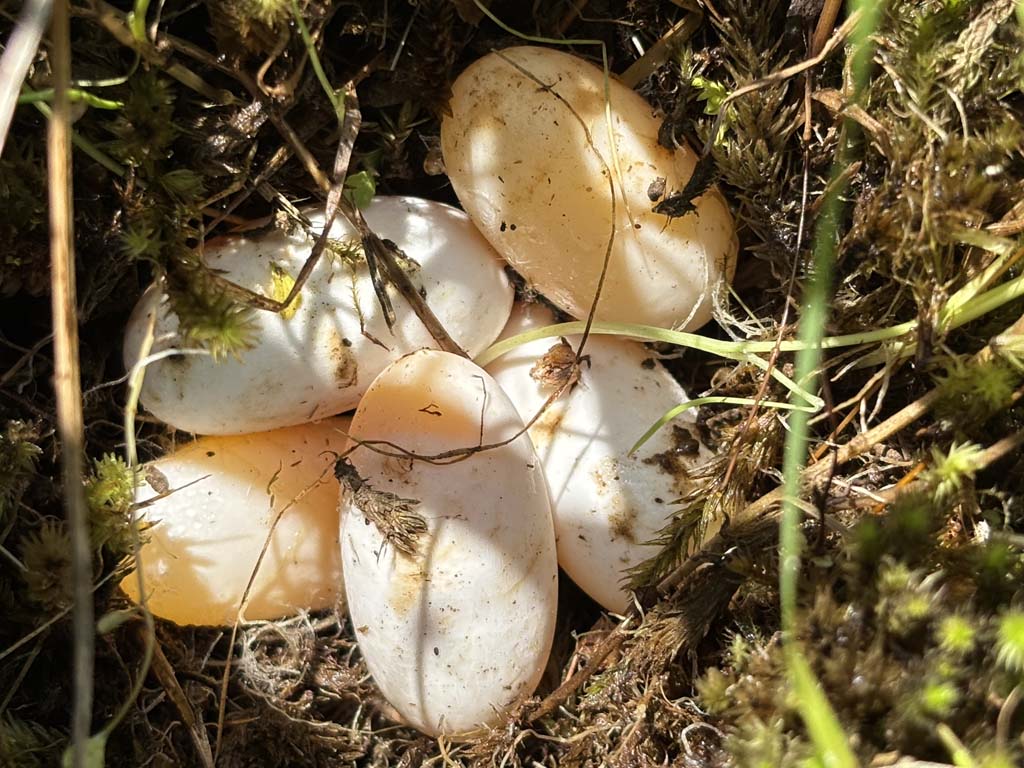
In the Southern Appalachians, Threatened bog turtles lay just a few eggs at a time, making each nest critical to the population’s persistence. To protect them, our team surrounds nests with cages to prevent predation by animals like raccoons, which have greatly increased with the expansion of human development in the region.
Digital Threats to Imperiled Wildlife
Threats like raccoon predators and habitat loss aren’t the only dangers, especially not in today’s connected world. Publicly shared information brings another set of consequences.
Researchers documented a population of wood turtles in Ontario, Canada, that declined by roughly 70 percent within two years after a graduate thesis identified the study site. The most likely explanation was poaching.
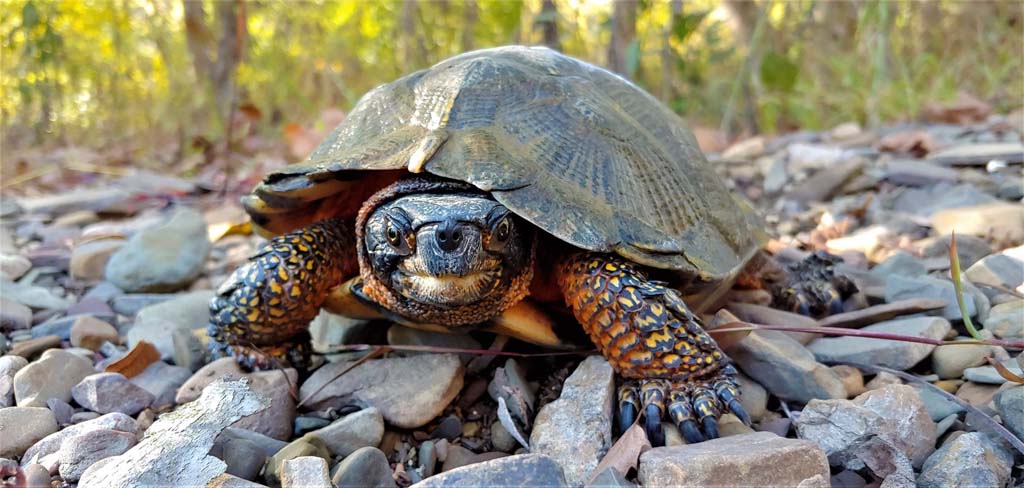
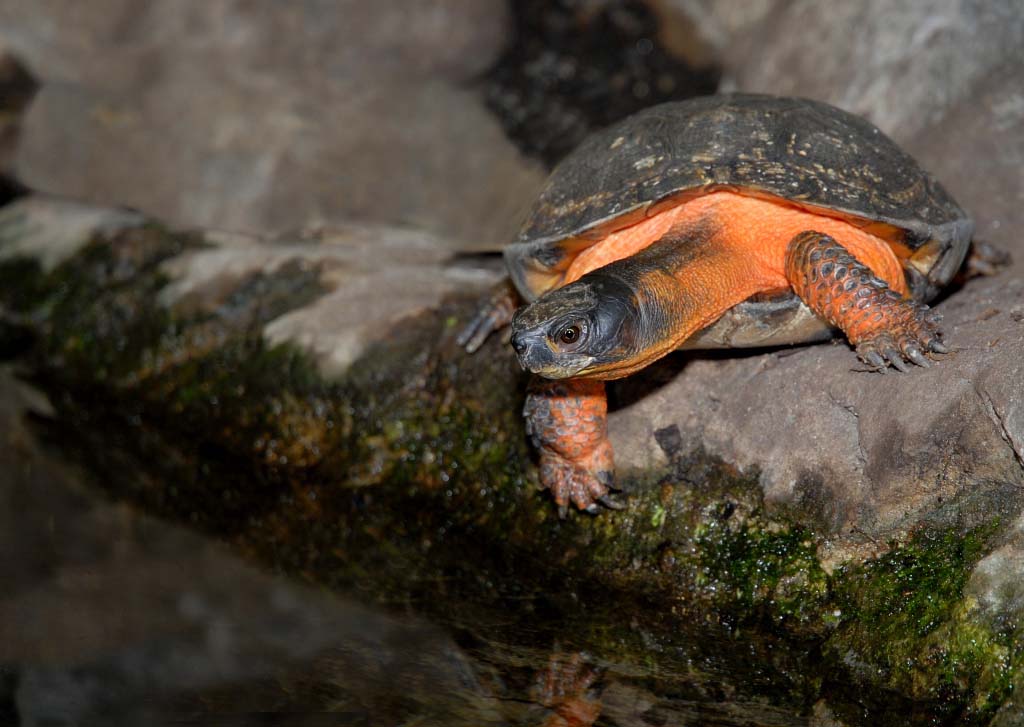
Many North American wildlife species, especially turtles, have become highly sought after in the international exotic pet trade, with demand in Asia driving organized poaching networks across the continent. The global illegal wildlife trade generates an estimated $7–23 billion annually, creating powerful incentives for collectors to locate and exploit rare species.
Unlike hatchlings, which are difficult to find and often suffer high natural mortality, adult turtles are deliberately targeted because they are more valuable and easier to sell. But adults sustain populations. Many turtle species take five years or more to reach reproductive maturity and produce relatively few offspring.
Removing breeding adults can cause populations to collapse quickly, sometimes before biologists or law enforcement even realize what is happening. For many turtle populations today, even losing one female a year can doom a population.
In illegal markets, price is tightly linked to rarity. As a species becomes scarcer in the wild, its value often rises, creating an incentive to seek out the remaining individuals.
For at-risk turtles and other species, social media posts can also be problematically revealing. Nancy and colleagues recently examined a collection of turtle and snake photos posted on social media. Using only photos and other publicly available information, they were able to pinpoint the exact locations of the animals 36 percent of the time, and within 100 meters for an additional 14 percent of posts (Nancy Karraker, unpublished data).
Community science platforms help observers contribute valuable data, but even subtle clues, like timestamps or coordinates from unrelated observations, can inadvertently guide illegal collectors to vulnerable species. These threats to wildlife populations now coincide with rapidly advancing technologies that make extracting and analyzing such information easier than ever.
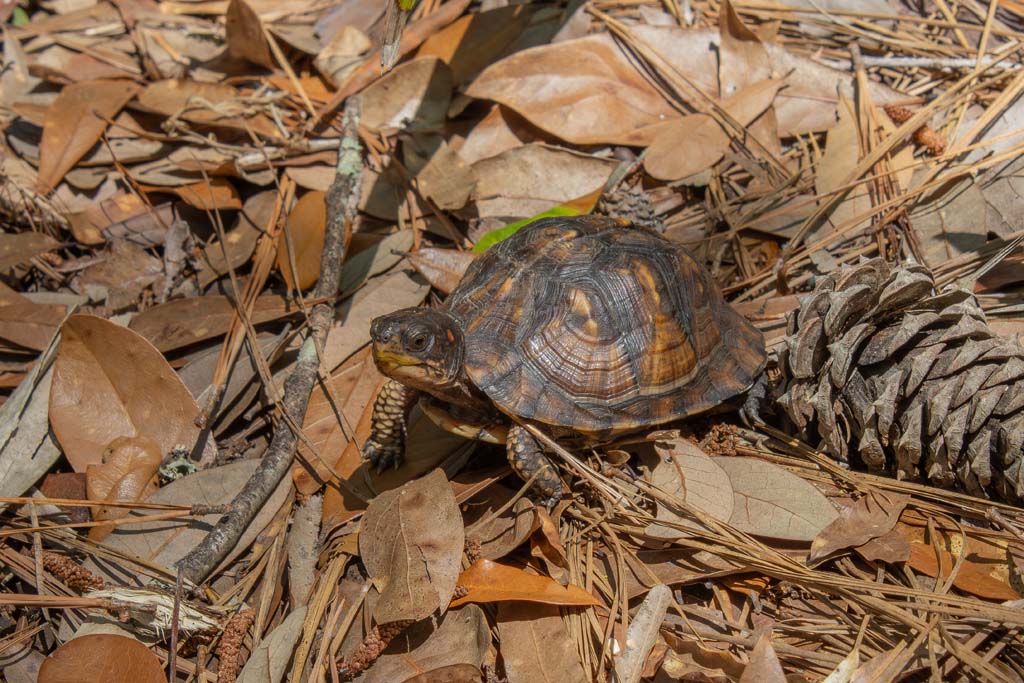
As Nancy said, “I can barely imagine a time when a nature lover could not find an eastern box turtle in its habitat, but that time could come.”
The pressures these animals face, from slow growth and low reproductive output to habitat loss and illegal collection, underscore why responsible sharing of information is critical for their survival.
How to Keep Wildlife Safe in the Digital Age
If loving reptiles and amphibians means protecting them, what does that look like in practice? CCITT offers guidance on information sensitivity and security that provides a practical, science-based roadmap for anyone who observes, photographs, or studies turtles and other wildlife. The goal is to share responsibly, helping these species while still connecting with the natural world.
The CCITT guidance emphasizes three core principles: remain informed about the conservation status of species, recognize what information is sensitive, and handle that information carefully to reduce risks of illegal collection and trade.
For observers, photographers, researchers, and community scientists, that means following these steps:
- Remove geotag data before posting photos. This prevents anyone from determining the exact location of the animal.
- Avoid including distinctive landmarks in images. Mountains, unique rock formations, or recognizable river features can give away a site.
- Obscure or generalize coordinates on community science platforms. Use offsetting or other tools if the platform doesn’t automatically mask locations.
- Avoid posting precise population numbers or timing of nesting and migration. These details can guide collectors to vulnerable groups.
- Do not share specific locations in captions or comments. Even casual references can be enough for a motivated collector to track down a population.
- Follow journal and agency best practices for sensitive research data. Limiting site details in publications or presentations is an important step in reducing risk.
Following these practices protects the species we care about. This guidance balances transparency with the urgent need to reduce risk, helping ensure the long-term survival of turtles and other at-risk reptiles and amphibians.
As Brooke said, we hope people will “talk to their colleagues, friends, and family about this because none of us is immune to the watchful eye of the wildlife trafficker.”
Find more detailed guidance in the CCITT Guidance on Information Sensitivity and Security for North American Turtles document.